MAG-STAR CHEF manufactures food bikes and food carts in Wenzhou, China, and exports to buyers worldwide. This guide explains what a food bike is, how it compares to food carts and trucks, what equipment fits on one, and what it costs to start.
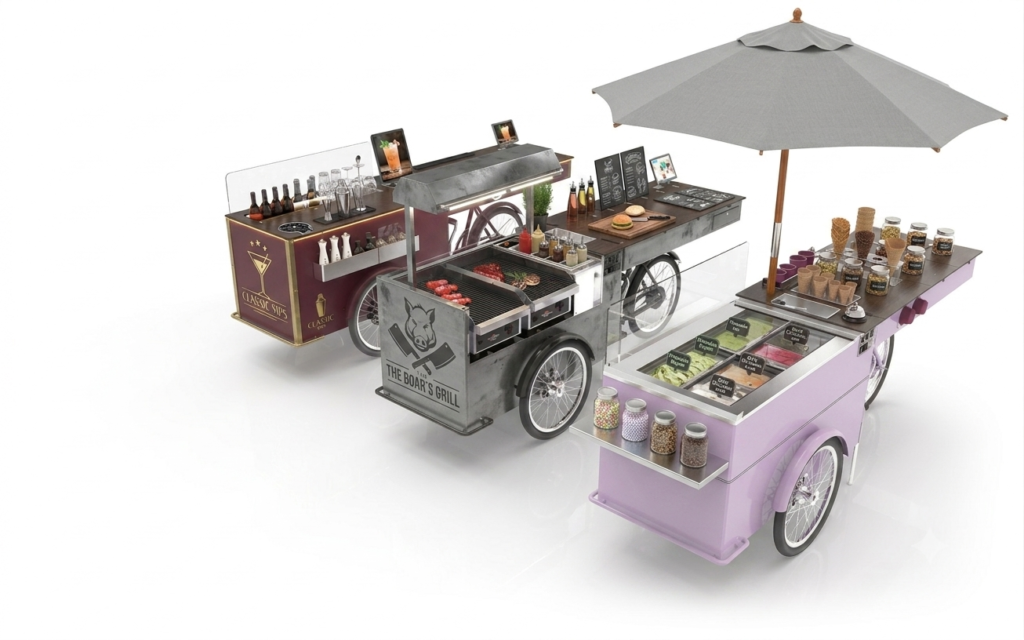
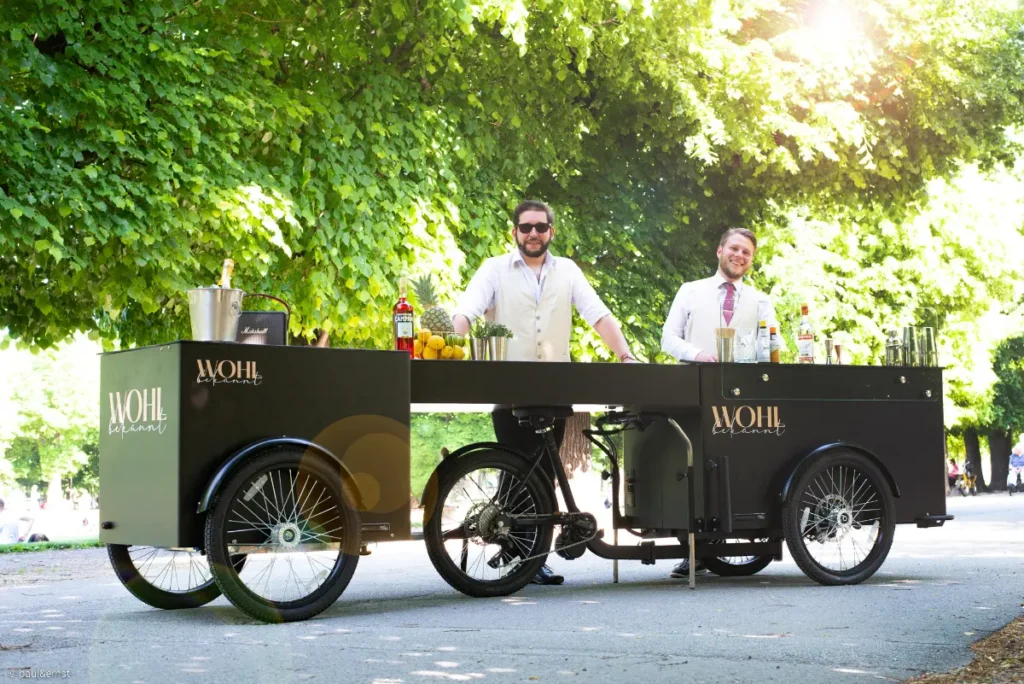
A food bike is a mobile food-selling platform built on a powered bike frame or a compact wheeled cart body — small enough to move by one person, equipped with cooking, refrigeration, or beverage-dispensing gear, and operated without a vehicle license. It is the lowest-cost, fastest-to-launch format in mobile food service, used for coffee, ice cream, street food, and beverages in markets worldwide.
What Exactly Is a Food Bike?
The term covers a spectrum of formats, and definitions shift between markets. In the strictest sense, a food bike carries its selling setup on a bicycle or electric tricycle frame. More broadly, buyers use “food bike” for any small wheeled food unit that one person can position — including push carts and towable mini-carts. What separates the category from food trucks is simple: no engine, no vehicle registration, no commercial driver’s license. You push it, tow it behind a small vehicle, or pedal it.
The typical footprint is 1–3 square meters. That constraint shapes everything: compact equipment, focused menus, and service models built on speed rather than seating. A food bike sells where foot traffic concentrates — sidewalks, campuses, parks, boardwalks, stadiums, night markets, and event grounds.
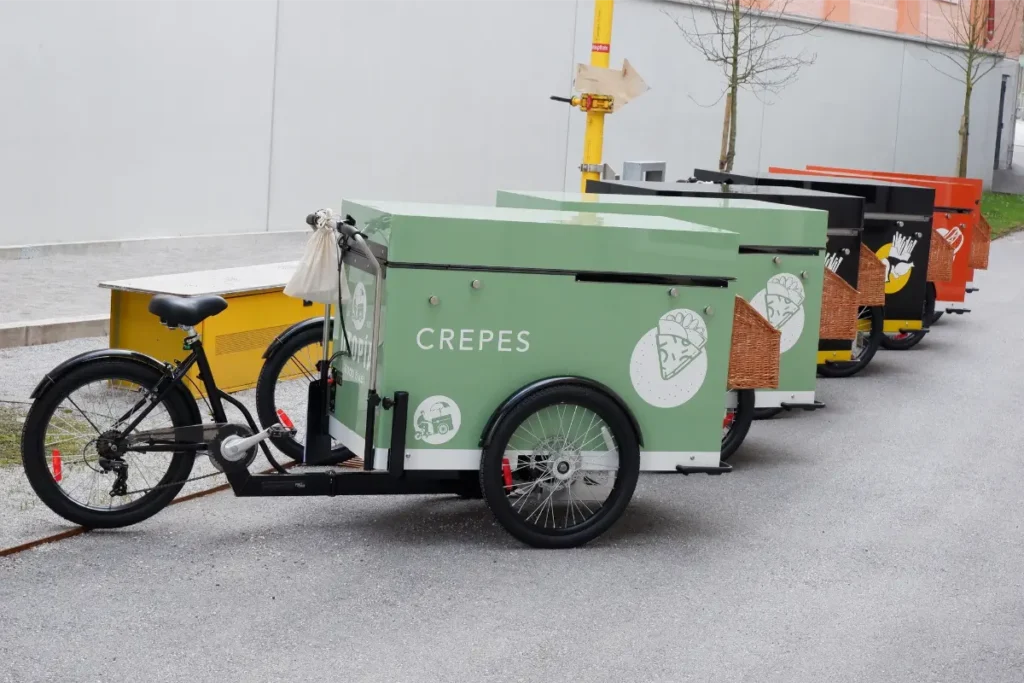
Food Bike vs. Food Cart vs. Food Truck — What Is the Difference?
| Food Bike | Food Cart | Food Truck | |
|---|---|---|---|
| Movement | Pedaled or pushed by one person | Pushed or towed | Self-driven vehicle |
| Typical footprint | 1–2 m² | 2–3 m² | 10–18 m² |
| Startup cost | $1,500–$5,000 | $2,000–$8,000 | $50,000–$175,000 |
| Licensing | Vendor/food handler permit | Vendor permit + health inspection | Vehicle registration + food license |
| Power | Battery / LPG | LPG / 110–220V hookup | Onboard generator or shore power |
| Menu scope | 1–2 products | 2–5 products | Full kitchen menu |
The trade-off is capacity versus agility. A food truck cooks more; a bike gets you into tighter, higher-footfall spots for a tenth of the capital. Many operators start on a bike or cart, prove the location, then upgrade — or scale sideways by running more units in more locations.
What Can You Sell From a Food Bike?
The format rewards focused menus with fast service and high margins:
- Coffee and hot drinks — the classic breakfast-commuter model
- Ice cream and gelato — Pozzetti-style wells or cold display
- Beverages — fresh juice, lemonade, draft beer at events
- Simple hot food — hot dogs, crepes, skewers, popcorn, pastries — see our single cooker cooking cart
- Packaged goods — snacks and merchandise at events
The rule of thumb: if it can be served in under 90 seconds by one person, it fits a food bike.
How Is a Food Bike Powered?
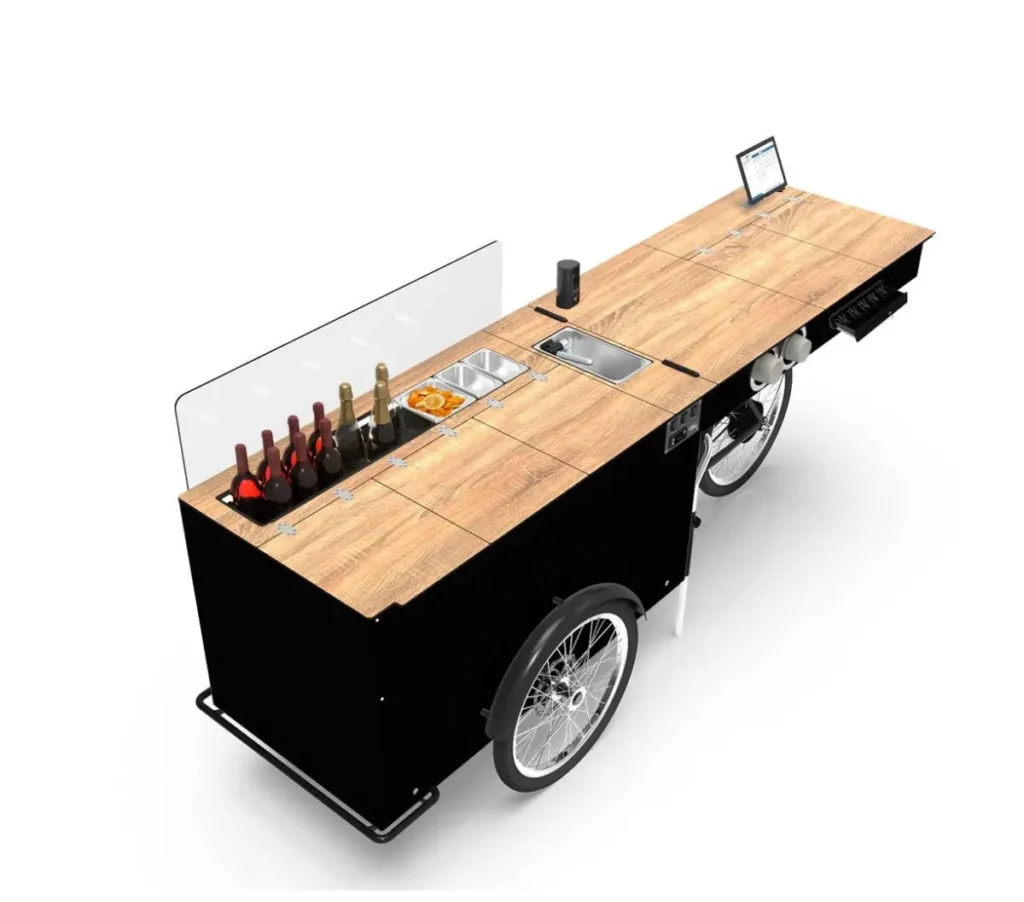
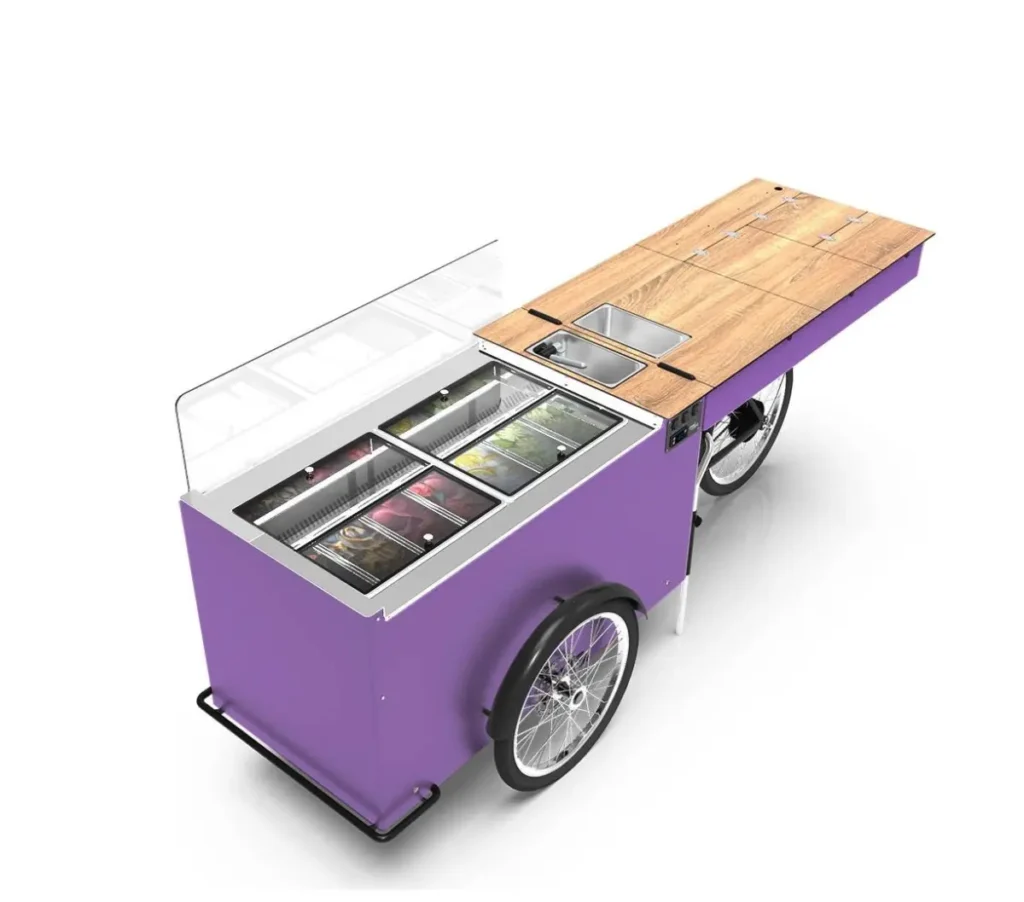
Three systems cover nearly every build. LPG gas runs burners and griddles anywhere, with cylinders stored on the frame. Battery packs drive refrigeration, lighting, and small appliances for a full service shift unplugged — the standard choice for ice cream bikes. Shore power (110V or 220V, market-dependent) suits carts with fixed pitches like markets and stadium concourses. Most manufacturers, including us, match the electrical specification to your destination market before production.
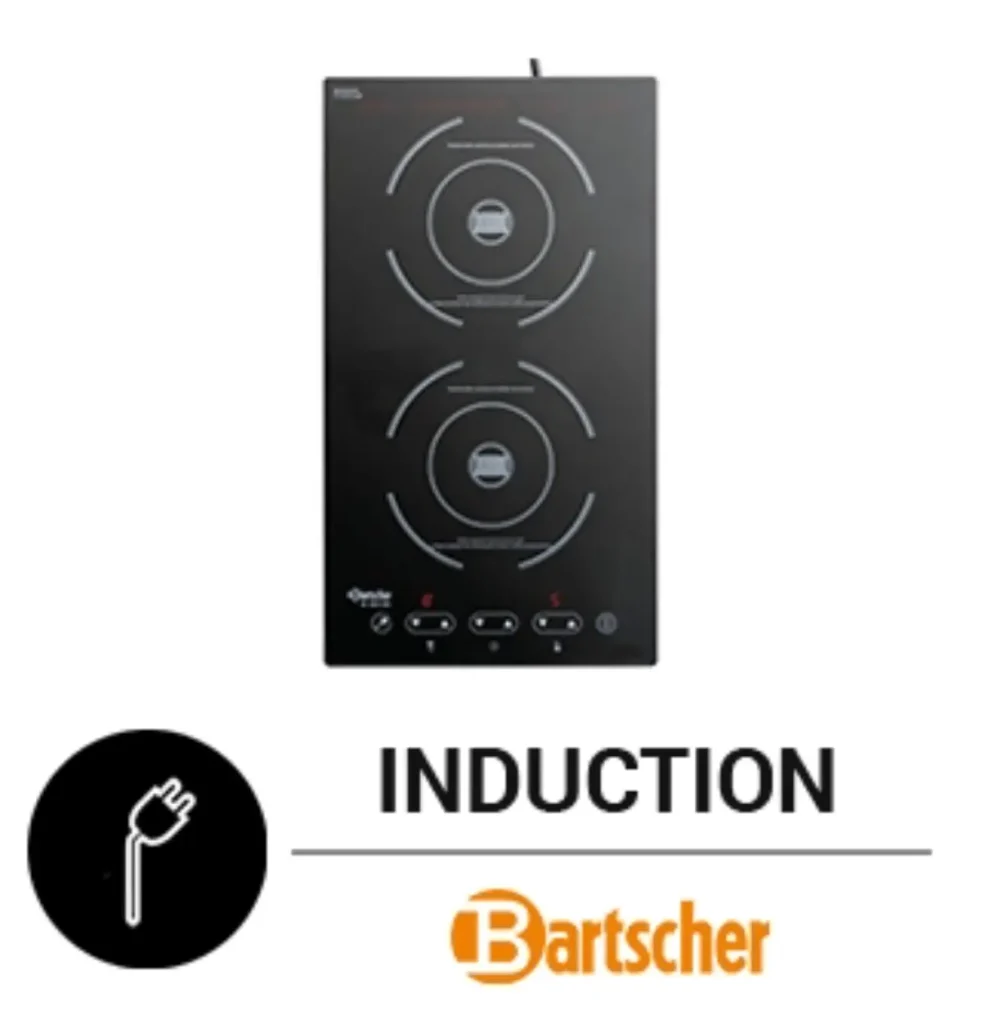
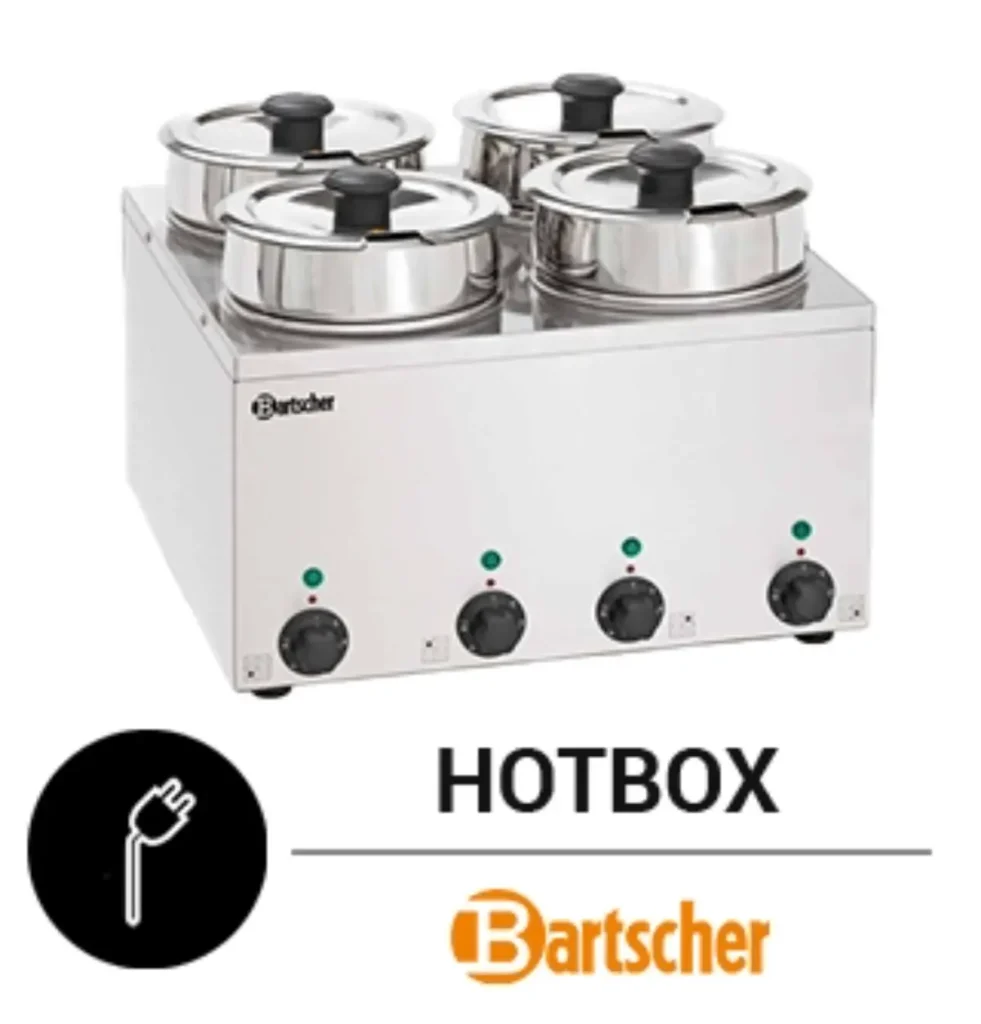
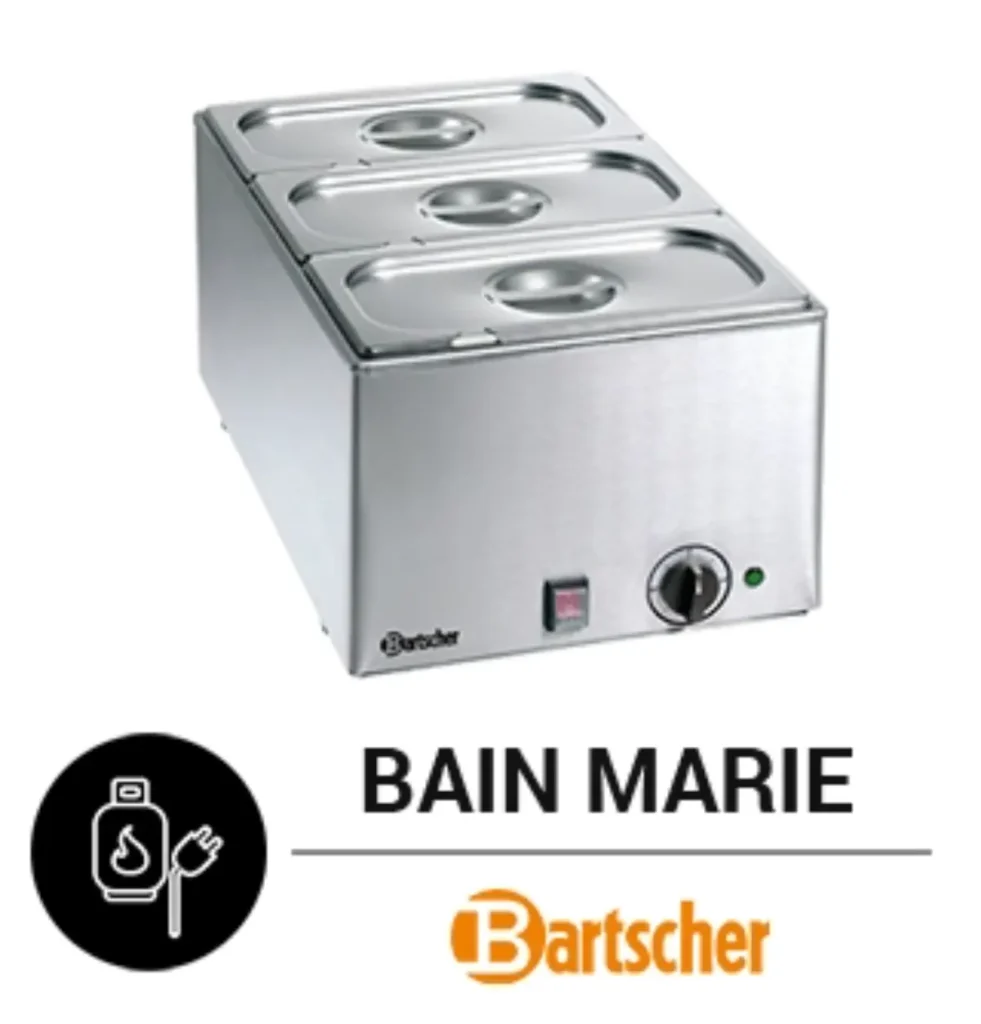
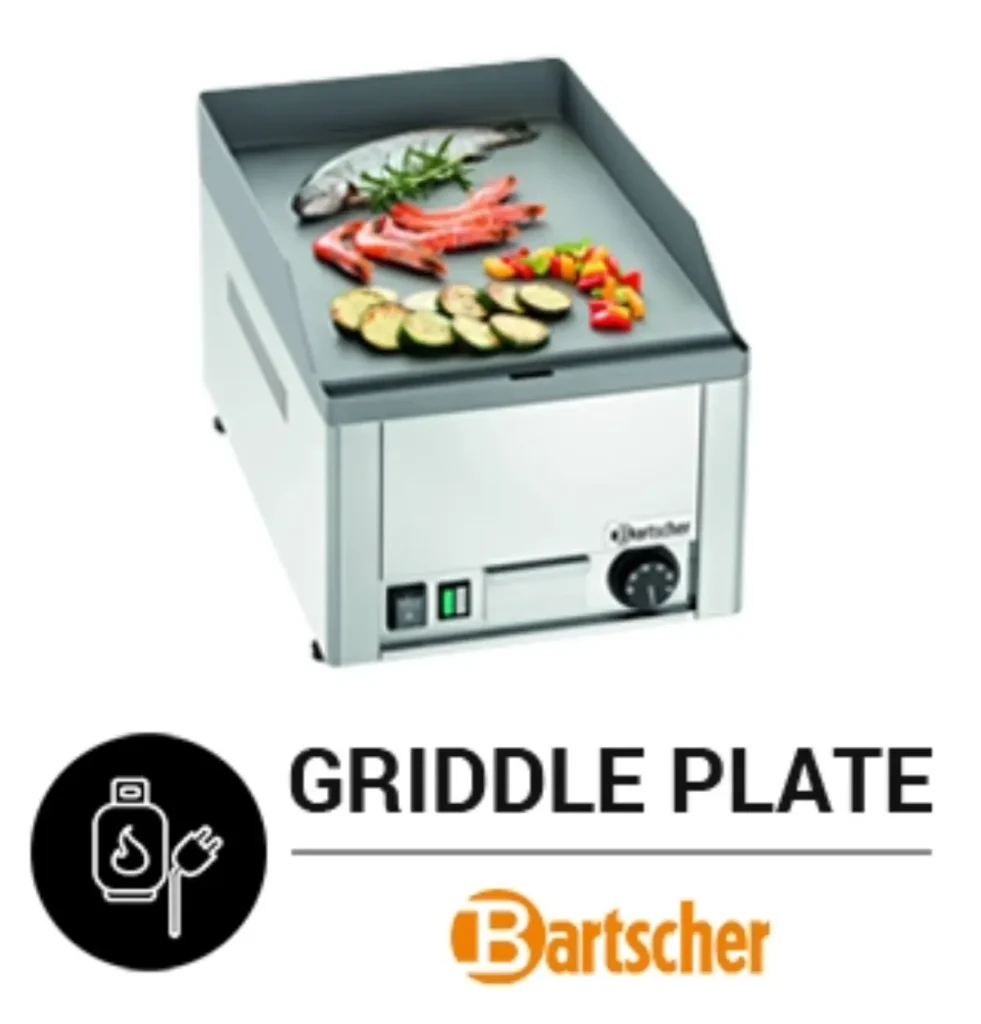
Explore all 14 built-in cooking appliances in our cooking equipment catalog.
Who Manufactures Food Bikes?
Food bikes and carts are manufactured by specialized builders rather than general vehicle factories. MAG-STAR CHEF is a B2B manufacturer based in Wenzhou, China — the country’s densest small-vehicle production cluster — producing cooking carts, ice cream carts, beverage carts, and multi-purpose base platforms for importers, event companies, and individual operators. Buying factory-direct means you specify voltage, gas type, refrigeration, and branding at the source instead of accepting a reseller’s stock configuration.
How Much Does It Cost to Start a Food Bike Business?
Budget three lines: the unit itself ($1,500–$8,000 manufactured, depending on equipment), permits and insurance (typically $200–$2,000 depending on jurisdiction), and working stock. Total launch capital commonly lands under $10,000 — a fraction of a food truck’s $75,000+ entry point. For a detailed breakdown by cart type, see our upcoming food cart cost guide.
Is a Food Bike Right for You?
A food bike fits if you want to test a food concept with minimal risk, serve high-footfall locations a truck cannot reach, or scale a fleet of small units instead of one big kitchen. It fits less well if your menu needs heavy ventilation, high volume, or sit-down service. If you are deciding between formats, start with the table above; if you already know, browse our product catalog or request a quotation — we build to your market’s power and gas standards.
Recommended Food Bikes & Equipment from MAG-STAR CHEF
Every unit below is factory-built in Wenzhou and customizable to your market’s voltage, gas type, refrigeration, and branding. Click any model for full specifications.
Key Components of a Modern Food Bike
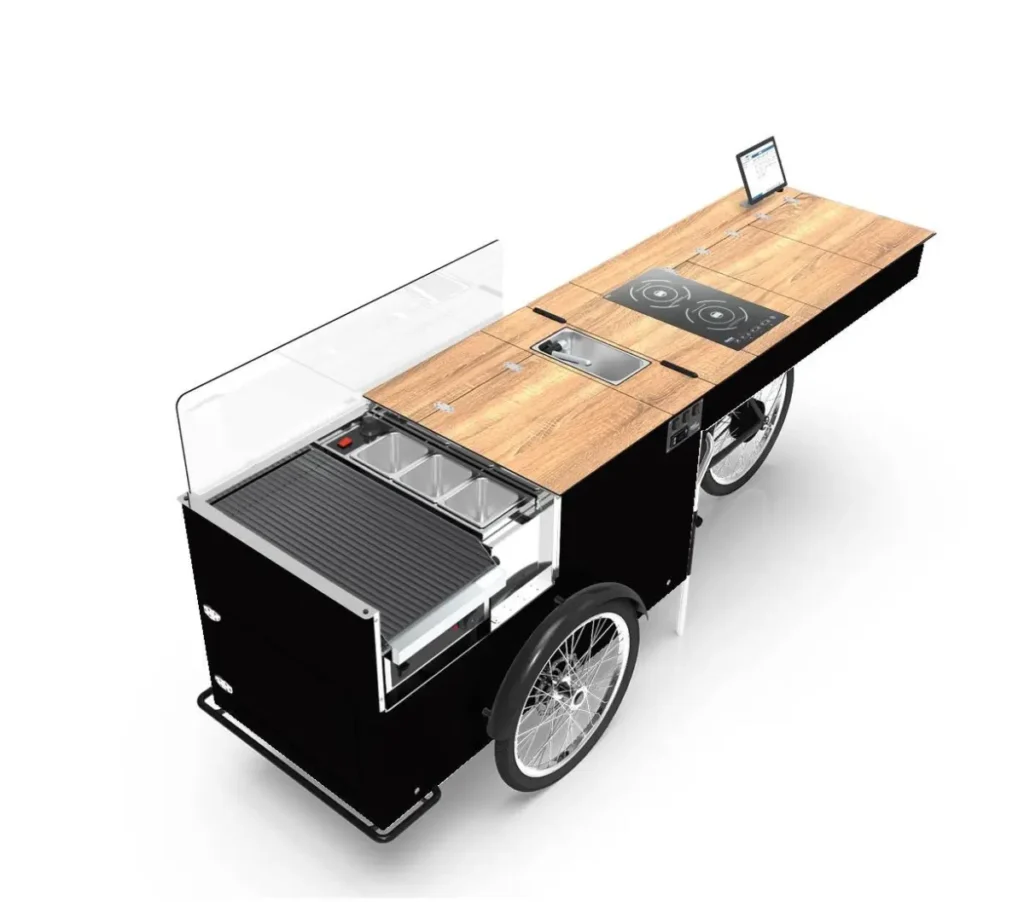
Understanding what is inside the box helps you compare quotes from different factories. Every serious food bike — including the ones we build at MAG-STAR CHEF — is assembled from eight core systems:
- Chassis and frame — powder-coated steel or 304 stainless, rated for 300–600 kg payload including equipment and stock.
- Countertops and work surface — food-grade 304 stainless with rounded corners for hygiene compliance.
- Power system — either dual 100–200Ah deep-cycle batteries with an onboard charger, a propane bay, or a shore-power inlet. Battery carts are silent and accepted at indoor venues and generator-free events.
- Cooking equipment — factory-fitted griddles, fryers, warming tops or crepe plates wired to the cart’s own breaker panel. See the full equipment range we fit at the factory.
- Refrigeration — optional under-counter fridge or freezer drawers, essential for dairy and meat menus.
- Sinks and water system — fresh-water tank, hand-wash basin and wastewater tank. Most health departments require a separate hand-wash sink, so never buy a cart without one.
- Awning and signage — retractable canopy for weather protection and a backlight-ready sign box for branding.
- Wheels and tow bar — pneumatic or solid tires sized for curb crossings, plus a removable tow bar for solo repositioning.
When you compare quotes, ask each manufacturer to itemize these eight systems. A quote that just says “cooking cart, $4,000” hides the decisions that matter: battery chemistry, stainless grade and sink configuration. Our double-stove cooking cart and single-stove cooking cart product pages list every component explicitly.
Common Misconceptions About Food Bikes
After a decade of export conversations with operators in 30+ countries, we hear the same five myths repeatedly. Correcting them will save you money and months:
- “Carts cannot run serious cooking.” A factory-fitted cart carries two burners, a fryer and a griddle with independent breakers — the same appliances as a small cafe kitchen. The limit is your menu discipline, not the platform.
- “I need a truck to be taken seriously.” Customers buy food, not vehicles. A clean, well-branded cart with a two-item signature menu outsells a generic truck in most street contexts — see the data in our cart vs truck comparison.
- “Battery power is weak.” Modern LiFePO4 packs run a full 8–10 hour service day including refrigeration, and recharge overnight on ordinary mains power.
- “Shipping from China is risky.” Factory-direct carts ship fully assembled in a crate inside a shared or full container, insured door-to-door. Standard builds leave the factory in 10–15 days; the logistics are routine now.
- “Permits will reject a cart.” The opposite is true in most cities: pushcarts and mobile food stands are licensed through a simpler, cheaper category than motorized trucks precisely because they pose fewer vehicle-safety issues.
How Food Bikes Are Used Around the World
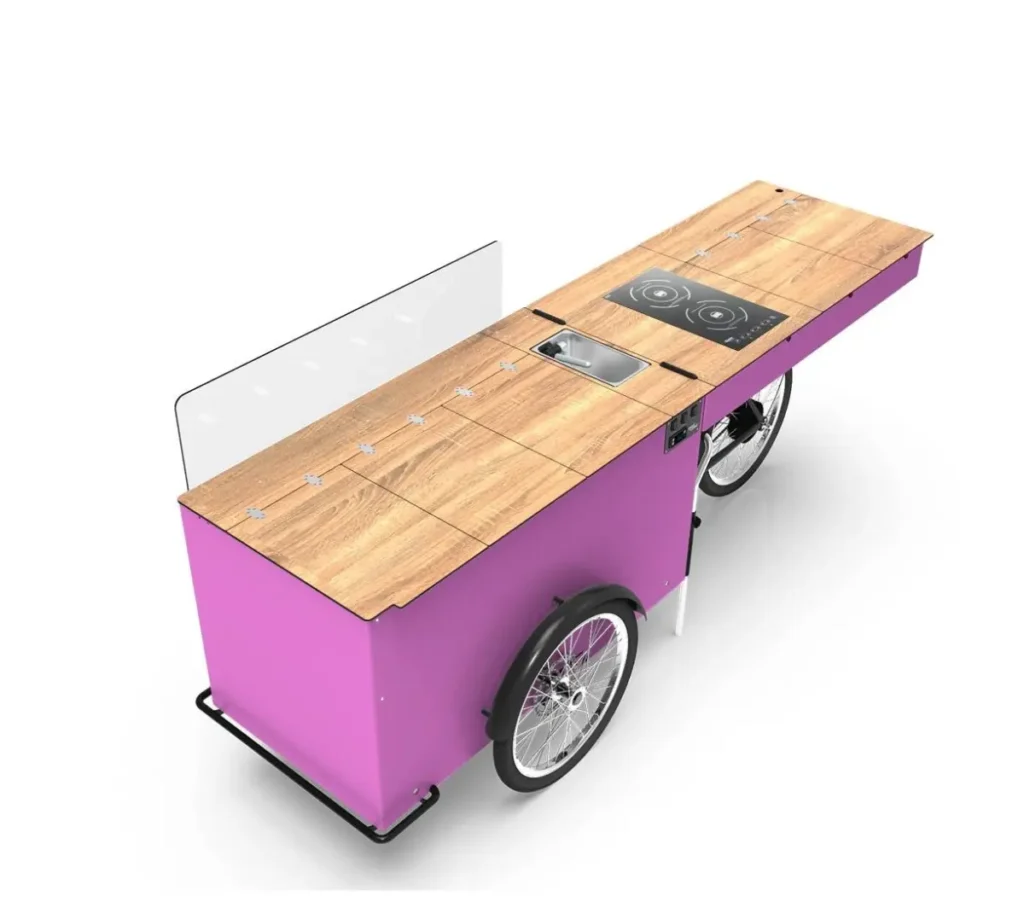
One of the strengths of the format is how differently the same cart is deployed across markets. These are the five deployment models we see most often in our export orders:
- Street vending (North & South America) — hot dogs, burgers and street classics at fixed daily pitches. Permits are mature and foot traffic does the marketing.
- Gelato and snack kiosks (Europe & Middle East) — the Pozzetti cart in pedestrian zones, promenades and tourist squares, where silent battery operation and elegant presentation matter more than cooking power.
- Campus and corporate catering (worldwide) — universities, hospitals and office parks contract a cart for weekday lunch service, guaranteeing footfall without a lease.
- Event circuits (Australia, US, EU) — festivals, farmers markets and sports events; a beverage cart at the right festival can out-earn a month of street service.
- Brand activations and rental fleets (agencies) — marketing agencies and rental companies buy carts in multiples, wrap them per campaign and rent them out; a single cart can serve a different brand every week.
Whichever model fits you, the starting point is the same: pick the cart family that matches your menu, confirm the permit category in your city, and get an itemized factory quote before committing. The multi-purpose base cart remains the most flexible first purchase because it accepts almost any equipment package later.
How Food Bikes Fit Into the 15-Minute City
Urban planners around the world are redesigning neighborhoods around the “15-minute city” concept, where daily needs sit within a short walk or ride. Food bikes are a natural fit for this model: they occupy less than 2 square meters of curb space, produce no tailpipe emissions, and can relocate between office districts, university campuses, and waterfront promenades as foot traffic shifts through the day. Cities from Paris to Bogotá have created specific vendor permits for pedal-powered and compact electric food units precisely because they deliver food access without the congestion that trucks create. For operators, this regulatory friendliness translates into lower permit fees and more legal selling locations per license. If you are evaluating formats against city policy, our cart versus truck comparison breaks down which format fits dense urban cores, and the base cart platform is the most common starting point for pedal-friendly builds.
Frequently Asked Questions
What is a food bike?
A food bike is a mobile food business vehicle built on a bicycle or tricycle frame, or a compact wheeled cart platform, equipped to prepare and sell food and beverages. Unlike a food truck, it needs no engine, driver’s license, or vehicle registration, making it the lowest-cost entry into mobile food service.
How much does a food bike cost?
A manufactured food bike or food cart typically costs between $1,500 and $8,000 depending on equipment level, refrigeration, and customization. Factory-direct imports from manufacturers like MAG-STAR CHEF price below local resellers. For a full price breakdown, see our food cart cost guide.
Do food bikes make money?
Yes. Because startup costs are low and overhead is minimal, a food bike in a good location can reach profitability within weeks. Margins on coffee, ice cream, and street snacks commonly run 50–70%. Success depends mainly on foot traffic and menu focus.
Do I need a license to operate a food bike?
In most countries, yes — usually a mobile food vendor or food handler permit, plus a health inspection of the unit (see the U.S. FDA Food Code as a reference standard). Requirements vary by city, but are generally faster and cheaper to obtain than food truck licensing, since no vehicle registration or commercial driver’s license is involved.