lectric vs. Gas Food Carts: 2026 Buyer’s Guide & Cost Comparison
Quick answer: For 2026, electric wins for most food cart operators — it opens indoor venues, passes regulations easier, runs quieter and needs less maintenance. Gas still wins on raw heat power and operating cost per kWh in regions with cheap LPG. Choose electric if you target malls, food halls, hotels, airports or generator-free events; choose gas if you run heavy griddle or fryer menus outdoors all day, where searing power and fuel logistics matter more than venue access.
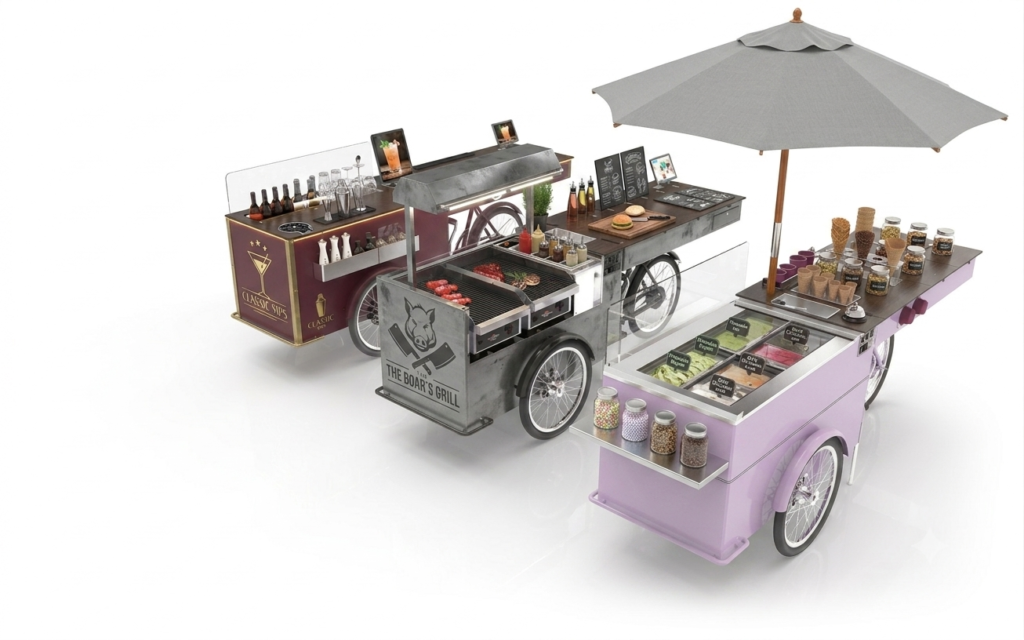
This guide comes from the export floor at MAG-STAR CHEF, where we wire and plumb both power types into carts shipped to 30+ countries. The right answer depends on your menu, your city’s rules and your target venues — not on generic pros-and-cons lists. Related reading: the equipment buyer’s guide, cart pricing, and our cart vs truck comparison.
How Electric Food Carts Work
An electric cart runs everything from a battery bank, a mains hook-up, or both. Modern builds — including every MAG-STAR CHEF cart — use LiFePO4 (lithium iron phosphate) batteries: 2,000–5,000 charge cycles, stable output, no off-gassing, and safe indoor transport. A typical cart carries 2–5 kWh of storage, enough to run refrigeration for 24 hours plus 4–6 hours of cooking appliances. The architecture is simple: battery bank → inverter → distribution panel with a labeled breaker per appliance → shore-power input that charges the bank and feeds appliances directly when parked at an outlet.
Two practical consequences follow. First, silence: no generator hum means you can work a hotel lobby, a museum exit or an evening market where noise rules apply. Second, zero combustion: no exhaust, no CO, no fuel storage rules — which is exactly what indoor regulators check for. The trade-off is heat output: a 3 kW induction plate is genuinely powerful, but sustained wok-style searing or high-volume frying favors gas.
How Gas Food Carts Work
Gas carts run LPG (propane or butane) from a dedicated cylinder bay: regulator, certified hose, shut-off valve, and a sealed, externally-accessed compartment that keeps cylinders away from ignition sources and passengers. Gas delivers raw heat cheaply — a burner head flows 5–8 kW for pennies per hour, and refills are available at every gas station in most countries.
The obligations are real, though: leak testing at commissioning and every regulator change, ventilation for any enclosed cooking area, and jurisdiction-specific rules on cylinder size and storage (many cities cap cylinders at 5–13 kg per cart, some ban them indoors entirely). The NFPA 58 LP-gas code is the reference most US inspectors work from, and our factory supplies a leak-test certificate with every gas-fitted cart. Done properly, gas is safe and battle-tested — street food ran on it for a century.
Head-to-Head Comparison
| Factor | Electric (LiFePO4) | Gas (LPG) |
|---|---|---|
| Indoor / enclosed venues | Yes — malls, halls, hotels | Usually banned |
| Max heat per burner | 2–3.5 kW | 5–8 kW |
| Fuel cost per service day | $0.5–$2 (grid recharge) | $1.5–$4 (cylinder) |
| Noise & vibration | Silent | Hiss; needs ventilation |
| Permit complexity | Low | Higher (fuel safety review) |
| Maintenance | Battery check only | Hoses, regulator, leak tests |
| Upfront hardware cost | +$500–$1,500 (battery pack) | Lower base |
| Cold-climate battery loss | 15–25% below freezing | Unaffected |
When Electric Wins
- Indoor and mixed venues — malls, food halls, airport concourses, hotel lobbies and event centers. These are the highest-rent-per-square-meter pitches in the industry, and a battery cart is the only format that gets in.
- Refrigeration-led menus — ice cream, gelato, cold drinks, pre-packaged desserts. Compressors sip power, so a battery pack runs all day. Our Pozzetti ice cream cart and beverage cart are battery-first builds for exactly this reason.
- Regulation-heavy cities — dense European old towns, Gulf malls, North American campuses. Fewer fuel rules means faster permits and fewer inspections.
- Brand-sensitive operators — silence and no fumes read as premium. Corporate catering buyers notice.
When Gas Wins
- High-volume searing and frying — burgers, kebabs, wok dishes, churros. A gas burner under a grill plate recovers temperature between orders far faster than induction at the same price point.
- All-day off-grid trading — weekend festivals and beach pitches where no outlet exists and a day of cooking would drain any realistic battery bank.
- Cheap-LPG markets — in much of Southeast Asia, Latin America, the Middle East and North Africa, cylinder gas costs a fraction of grid electricity per kWh of cooking heat.
- Sub-zero operations — winter markets and ski resorts, where lithium capacity drops 15–25% and gas simply does not care about the cold.
Induction: The Electric Middle Ground
If you want electric venue access but worry about heat output, induction closes much of the gap. An induction cooktop converts ~85–90% of its energy directly into the pan (versus 40–50% for an open gas flame), so a 3 kW induction plate boils and griddles like a much larger gas burner — with no open flame, no hot ambient air, and pan-recognition safety that inspectors like. The honest limitations: it needs ferrous cookware, it cannot wok-toss with the flame licking the sides, and it draws hard on the battery, so a two-induction build needs a 5 kWh+ pack. Many of our cooking-cart customers now specify one gas burner plus one induction plate — searing power when the queue builds, silent electric for the rest of the menu.

Five-Year Cost of Ownership
Hardware price is only the entry ticket. Over five years, assuming 250 trading days a year and a moderate cooking load:
| Cost Item | Electric | Gas |
|---|---|---|
| Fuel / energy (5 yr) | $1,200–$2,500 | $1,800–$4,000 |
| Consumables (hoses, regulators, tests) | $0–$100 | $300–$700 |
| Battery replacement (year 5–6) | $400–$900 (one cycle) | $0 |
| Inspection / permit friction | Low | Recurring leak-test visits |
| Venue access value | Opens indoor pitches | Outdoor only |
On pure fuel, gas usually loses at Western grid prices and wins where LPG is cheap. The decisive line is the last one: one indoor mall or hotel contract typically pays for the entire battery premium in a month.
Regulations and Venue Access by Region
Rules cluster into three families. North America: most health codes treat carts under a mobile-food-facility category where propane requires extra fire-department sign-off; indoor propane is broadly prohibited. EU/UK: CE-marked electricals (standard on our carts) plus local street-trading consent; gas adds a Gas Safe-registered fitting certificate in the UK. Gulf & Asia: malls and indoor venues are the fastest-growing food cart segment and are effectively electric-only. The baseline documents to read are your city’s mobile vending code and, for electrical safety, the IEC 60335 household-appliance safety standard our components are certified to. When in doubt, ask your local fire authority one question: “Is LPG allowed at my intended pitches?” — the answer usually decides the power source for you.
Our Factory Recommendation by Menu
| Menu | Recommended Power | Build |
|---|---|---|
| Coffee & hot drinks | Electric | Base cart + espresso + battery |
| Ice cream / gelato | Electric | Pozzetti cart, battery refrigeration |
| Waffles / crepes / pancakes | Electric | Waffle maker / pancake griddle on induction |
| Burgers & kebabs (outdoor) | Gas | Double-stove cart + gas stove |
| Mixed street food | Hybrid | 1 gas burner + 1 induction, 5 kWh pack |
Real-World Scenario: Two Operators, Same City
Consider two operators who opened in the same European city last spring. Operator A runs a gas double-stove cart on a busy riverside pitch: burning costs are trivial, the sear on her smash burgers is excellent, and her summer weekends are fully booked. Operator B runs a battery cart with an induction plate and a cold well: he cannot do her riverside pitch without a generator exemption, but he holds a weekday contract serving office towers’ ground-floor food halls — venues with strict no-combustion rules — plus evening shifts at the municipal market hall. Her gas cart earns more per trading day; his electric cart earns on more trading days. After a full season their annual revenue is within 10% of each other, achieved in completely different ways. The lesson is not that one power source is universally better — it is that the power source must match the venue portfolio you can actually secure. Write down the five pitches you want most, check their rules, and the choice makes itself.
Battery Care: Getting 5+ Years from a LiFePO4 Pack
The battery is the only component on an electric cart with a finite, predictable life, and operator habits decide whether it lasts three years or seven. The rules are simple: avoid storing the cart fully charged or fully empty — 40–80% state of charge is the storage sweet spot; charge with the supplied charger on an ordinary outlet overnight, and never with a mismatched fast charger; keep the battery bay ventilated and dry, and wipe terminal dust quarterly; and in freezing weather, warm the pack to above 0°C before heavy discharge — most of our winter-market customers simply run the first hour on shore power. LiFePO4 chemistry tolerates 2,000–5,000 cycles, so a daily-charging operator should see five to seven years before capacity fades below 80% — at which point a plug-in replacement pack drops in without rewiring. Budget $400–$900 for that eventual swap and the five-year cost table above stays honest.
How We Spec Power at the Factory
Every power system we install starts from a load sheet, not a guess. You send the menu; we list every appliance’s nameplate draw, apply a diversity factor (not everything heats at once), add 25% headroom, and the result sizes the battery bank, inverter and shore inlet. The distribution panel is then labeled appliance-by-appliance so your local electrician — and your health inspector — can read the system at a glance. Gas builds follow the parallel discipline: burner kW, line sizing, regulator capacity and cylinder bay volume are calculated, then leak-tested at 1.5× working pressure with a certificate packed in the crate. This engineering-first process is why our carts pass first-time inspections in markets as different as Germany, the UAE and Chile. When you request a quote, include your full appliance list and target pitches — the load sheet costs nothing and prevents the single most common specification mistake.
One final note for operators comparing quotes across suppliers: ask every builder the same three questions and compare engineering answers, not brochure photos. What is the total simultaneous load my menu draws, and how did you size the system? Show me the breaker label layout for the exact cart I am buying. And what documentation ships in the crate — load sheet, leak-test certificate, CE declarations? A builder who answers all three in writing will build a cart your inspector respects; a builder who answers with adjectives will build you a punch list.
Frequently Asked Questions
Is an electric food cart more expensive than a gas cart?
Upfront, yes — typically $500–$1,500 more for the LiFePO4 battery pack and inverter. Over five years the gap usually closes or reverses through cheaper energy, zero gas consumables and access to higher-revenue indoor venues.
How long does a battery-powered cart run?
A 3–5 kWh pack holds refrigeration for about 24 hours and runs 4–6 hours of active cooking. With shore power at the pitch, cooking draws from the grid and the battery never empties.
Can I convert a gas cart to electric later?
Partially. Our carts are pre-wired so adding induction or swapping a gas stove for an electric heating pot is a plug-and-play change, but the battery bank is a factory-stage decision — retrofitting a 5 kWh pack into a finished cart is rarely cost-effective.
Is gas dangerous on a food cart?
Not when installed to code: sealed cylinder bay, regulator, certified hose, shut-off valve and leak testing at commissioning. The incidents that make the news almost always trace to retrofitted or improvised installations — another argument for factory-fitted builds.
Which power source is better for winter trading?
Gas. Lithium capacity drops 15–25% below freezing and customers huddle at outdoor markets, exactly where a gas cart’s raw burner heat and unaffected fuel are advantages.
Written by Mike, export sales lead at MAG-STAR CHEF. Send us your menu and target venues via the quote desk and we will spec the power system within 24 hours (WhatsApp +86 137 5771 7214).