Quick answer: Food cart regulation is a municipal matter almost everywhere, but the requirements repeat in every country: (1) a mobile vending permit, (2) food-safety registration or a food handler certificate, (3) a hygiene inspection of the cart itself — hand-wash sink with hot water, safe refrigeration, food-contact stainless, and for gas builds a fuel-safety review. Buy the cart to the standard and the permits follow; buy a non-compliant cart and no paperwork rescues it.
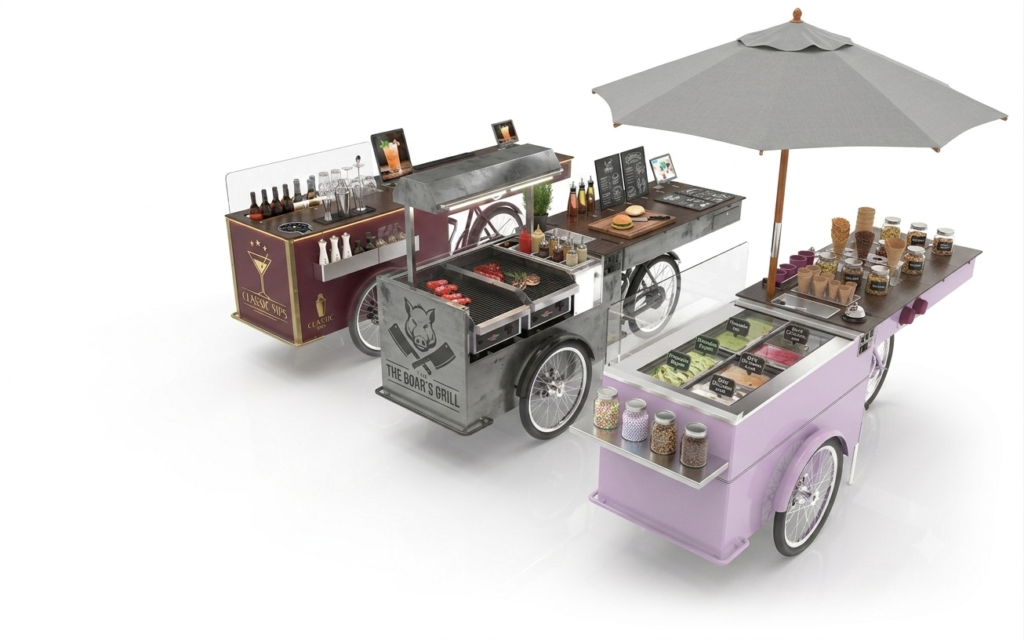
This guide maps the regulatory baseline across the markets our carts ship to, from the export floor at MAG-STAR CHEF. It complements the certifications guide, the 8-step launch guide, and the power source compliance notes.
The Universal Three-Layer Permit Stack
Whatever the country calls it, the stack is the same. Layer 1 — vending authorization: the city or venue allows you to trade at a location, via a vending permit, market stall booking, or a private contract. Layer 2 — business and food-safety registration: you as an operator are registered (business license, food handler certificate, or both) and can legally sell food. Layer 3 — the cart passes inspection: the equipment itself meets hygiene and safety code — usually at a one-time registration inspection for carts, then periodic re-inspection. Budget $100–$2,000 for the full stack depending on city. The critical insight for buyers: layers 1 and 2 are paperwork you can start during the 4–6 week production window, but layer 3 is physical — it is decided by how the cart was built, which is why factory-fitted construction with documented inspection beats retrofits in every market we ship to.
North America: Category Systems and Fire Codes
US and Canadian health departments classify mobile units into categories — typically by menu risk and equipment: pre-packaged only, limited preparation, and full open-food service. The category decides inspection depth. Carts doing open food need the hand-wash sink, often a three-compartment warewashing setup or approved single-use service, and sometimes a commissary agreement. Propane triggers an extra fire-department review in most jurisdictions and is broadly banned indoors. The reference code most inspectors work from is the FDA Food Code; it is a model code, so your state or province will have its own version — read the mobile-food chapter of yours before finalizing the cart spec. Stainless grades and plumbing codes are where non-compliant imports fail; carts built to NSF-aligned specs pass without argument.
Europe and the UK: CE, Street Trading and Hygiene Packs
European regulation concentrates on product conformity plus local trading consent. CE marking on electrical components is the entry ticket — it declares conformity to EU safety directives and is standard on our carts; UK buyers should confirm UKCA or accepted CE recognition post-Brexit. Street trading consent is municipal and famously variable: London boroughs, Paris arrondissements and Italian communes each run their own schemes with waiting lists. Food hygiene follows the EU food hygiene package: registration with the local authority, HACCP-based food safety management (lightweight but documented), and food handler training. Germany adds the Gesamtnorm for mobile units in some states; the practical takeaway is the same everywhere — a cart with a documented build (materials certificates, component declarations, leak-test certificate) passes German-level scrutiny anywhere on the continent.
Middle East and Asia: The Fastest-Growing Cart Markets
The Gulf states regulate through municipality food control departments with structured approval processes — and they are the world’s most cart-friendly market right now, driven by malls, promenades and event venues. Saudi Arabia and the UAE both require food watch registration, municipality approval of the unit, and for many venues an NOC from the property. Indoor venues are a huge share of demand and accept only battery carts. Across Southeast Asia, regulation is lighter and market-driven: Singapore licenses via the NEA with clear hawkers-center and event categories; Thailand and Vietnam regulate informally through district offices, though formal venues still require food-safety certificates. Japan and South Korea run structured permit systems with strong hygiene expectations. The pattern across Asia: rules are easier, but premium venues apply European-level standards voluntarily — which is why certification still pays in “easy” markets.
What Inspectors Actually Check First
Across every market we ship to, the first five checks are remarkably consistent:
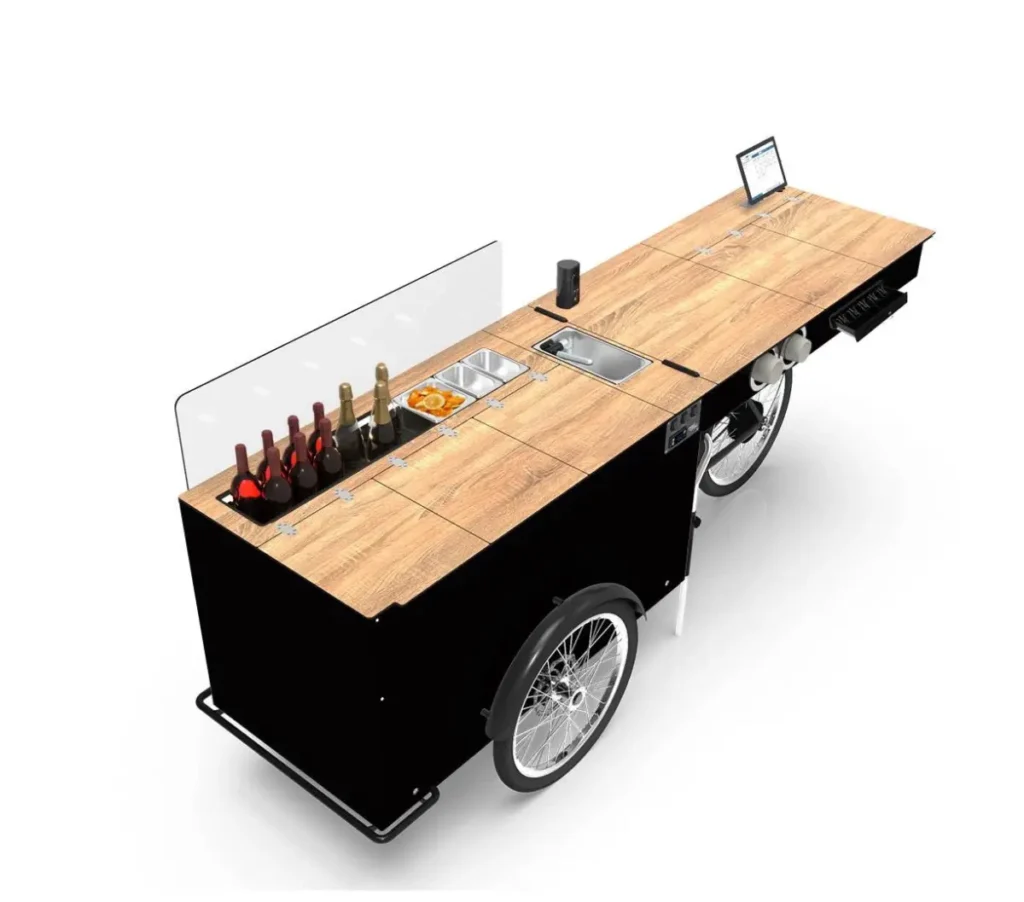
- Hand-wash sink with hot water — present, plumbed, stocked with soap and towels.
- Food-contact surfaces — 304 stainless, cleanable, no bare wood or rust.
- Temperature control — refrigeration holding safe temperatures with a working thermometer.
- Wiring and breakers — labeled, no improvisation, no daisy-chained power boards.
- Fuel safety (if gas) — sealed cylinder bay, regulator, shut-off, leak-test evidence.
A cart that clears these five rarely gets a second look. Our 18-point factory inspection maps directly onto this list, and every order ships with the equipment schedule and certificates that answer them on paper before the inspector arrives — the same document set described in the production guide.
Step-by-Step: Your First Permit Application
The first permit is the hardest because everything is unfamiliar; the second takes half the time. The sequence that works in most jurisdictions: (1) confirm the correct category — call the municipal licensing office with your menu description and ask which mobile category applies; (2) assemble the cart file — equipment schedule, dimensions, photos, materials and component certificates, all of which ship in your export pack; (3) complete the operator-side requirements — business registration, food handler certificate, commissary agreement where required; (4) book the registration inspection, bringing the cart clean, stocked with soap and towels, and running; (5) apply for the vending location authorization — permit, market booking, or venue contract. The two steps that stall first-timers are (1) and (2), and both are solved by paperwork that already exists if the cart was bought factory-fitted: the equipment schedule answers category questions, and the certificates answer inspection questions. Start the operator-side steps during the production window — the 15–25 days your cart is on the line are exactly the 15–25 days your paperwork needs, as sequenced in the launch guide.
Common Compliance Failures and Their Fixes
The same five failures cause most first-inspection rejections, and all five are preventable at ordering time. No dedicated hand-wash sink — fatal and common in retrofits; every our build includes one because the rule is near-universal. Unlabeled or improvised wiring — inspectors read breaker labels before anything else; the labeled distribution panel answers them before they ask. Wrong stainless grade or bare wood in the prep zone — 304 food-contact surfaces are the standard, and “it will be replaced later” is not an argument inspectors accept. Missing thermometer or temperature display on refrigeration — a $15 fix that reads as professionalism. Gas without leak-test evidence — the certificate ships with every gas build; keep it in the cart. The pattern behind the list: inspectors reject improvised details, and factory-fitted construction eliminates improvisation by design. Buyers weighing factory-fit against local retrofit savings should price the retrofit’s real cost — the failed inspection, the re-inspection fee and the lost trading days usually exceed the savings several times over.
Insurance and Liability: The Permit Nobody Mentions
Permits get the attention, but liability insurance is the requirement that ends more cart businesses prematurely than any inspection — usually at the moment a venue asks for the certificate. The core cover is general liability (slips, burns, property damage at the pitch), typically $50–$150/month for $1–$2 million coverage. Product liability matters for dairy and allergen exposure — ice cream operators should confirm it explicitly, since not all street-food policies include it. Equipment cover protects the cart itself against theft, fire and transit damage; fleets and rental operators need it unconditionally because their units live in other people’s hands. Landlords, malls and event organizers increasingly require to be named as additional insured — a standard endorsement that takes an insurer one email but takes a new operator by surprise in week one if unprepared. Two practical notes: insurers ask for the cart’s documentation pack (certifications, inspection record) when underwriting, and a factory-documented build reads as lower risk — some carriers price it accordingly. Budget the full insurance line inside the payback model from day one; the operator who discovers this cost when the mall contract is on the table has handed the venue a reason to pick the competitor whose certificate is already in the inbox.
Allergen and Menu Transparency Requirements
Regulators increasingly treat allergen disclosure as core compliance, not courtesy — and for desserts the bar is high because dairy, nuts and gluten are the big three. The EU requires written allergen information for any non-prepacked food, the UK’s Natasha’s Law sets the template for labeling, and US jurisdictions apply FDA big-9 allergen disclosure through state retail codes. Practically, a cart complies with: an allergen matrix card at the counter (every flavor, every ingredient category), ingredient records from your supplier for each base and topping, and staff — that is, you — able to answer “does this contain nuts” without improvising. Cross-contamination discipline matters as much as the list: dedicated scoops per pan, a wipe-down protocol between allergen-containing and allergen-free service, and a visible policy for customers who ask. The design support is built in — sealed pans and covered toppings keep flavors isolated, and the stainless prep zone wipes clean in minutes, but the system only works if the matrix card exists. Print it before the first trading day; it costs one page and answers the question inspectors and anxious parents both ask. Allergen readiness, like the hand-wash sink, is a compliance item that doubles as a trust signal — the two cheapest reputation investments a cart makes.
One meta-note on regulation worth internalizing: it always ratchets, never relaxes. Cities add categories, allergen rules expand, gas restrictions tighten, indoor venue standards rise — every trend in every market we ship to points the same direction. The buying implication is to build for the code of two years from now, not two years ago: the battery-electric architecture, the labeled electrical panel, the 304 surfaces and the documentation pack are all “future-compliant by default,” which is why operators who bought on the cheap minimum keep spending on retrofits while operators who bought to standard keep trading. Regulation punishes the improvised and quietly rewards the documented — plan accordingly.
One more regulatory layer buyers underestimate at ordering time: product insurance requirements written into venue contracts. Malls, hotels and event organizers increasingly specify minimum liability coverage, additional-insured endorsements and — for equipment — documented certification before a cart trades on their property. The cart’s certification file is therefore not only an inspection asset but a contract-enablement asset: the operator whose pack is complete signs the venue the same week; the operator chasing paperwork signs after the season starts. This is one more reason the documentation pack ships standard with every unit — it is the difference between being venue-ready and being almost venue-ready when the good contract appears.
Frequently Asked Questions
What permits does a food cart need?
Typically three layers: a mobile food vendor permit from the city, a food handler / business registration, and for open food service a health inspection covering sinks, refrigeration and surfaces. Gas builds add fire-department sign-off.
Do I need different permits in every country?
The categories repeat everywhere but the names and fees differ. The baseline is universal: mobile vending authorization, food safety registration and a hygiene-compliant cart. Confirm city-level rules – vending is almost always municipal, not national.
Are health departments strict about sinks on carts?
Yes – a dedicated hand-wash sink with hot water is the single most-checked requirement in nearly every jurisdiction. Every MAG-STAR CHEF cart ships with one as standard.
Can food carts operate indoors?
Battery-powered carts can: malls, food halls and hotels accept emission-free, silent units. Gas and generator carts are broadly prohibited indoors.
What certifications should the cart itself carry?
CE marking for European markets, NSF-aligned stainless and component specs for the US, and IEC 60335 alignment for electricals. Documentation should ship with the cart – our export pack includes it.
Written by Mike, export sales lead at MAG-STAR CHEF. Tell us your country and city via the quote desk and we will confirm the documentation pack your market requires (WhatsApp +86 137 5771 7214).