Quick answer: To start a food cart business, follow 8 steps: (1) validate your menu idea, (2) research local permits, (3) choose your cart type, (4) order from a manufacturer, (5) secure a location, (6) register the business and insurance, (7) test and launch, (8) scale to a second cart. Typical startup capital is $4,000–$15,000, and most operators launch within 30–60 days of ordering a factory-direct cart.
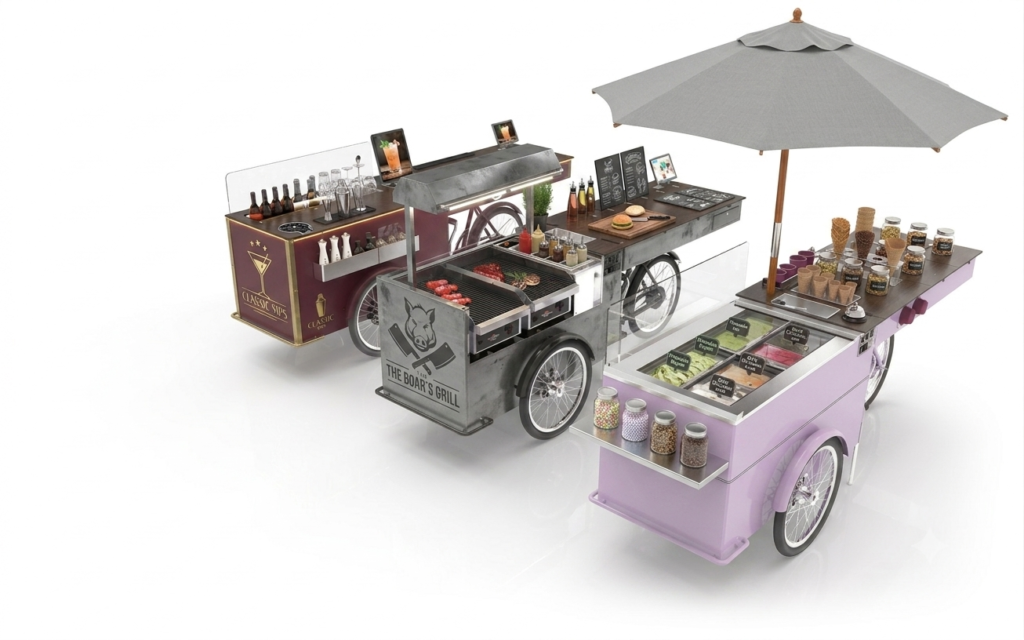
This is the complete launch playbook from the manufacturing side — MAG-STAR CHEF builds food carts in Wenzhou, China and ships to operators in 30+ countries. We will cover the exact sequence, the costs at each step, and the mistakes that kill first-time carts. Background reading: What Is a Food Bike?, food cart costs, and cart vs truck.
Step 1: Validate Your Menu Before You Buy Anything
Cart businesses fail on menus, not equipment. Pick a menu that is 3–6 items, one cooking method, under 4-minute ticket times. The cart follows the menu: a crepe concept needs a griddle; bao needs a steamer; gelato needs refrigeration only. Write down your menu first — then the equipment list writes itself. See our cooking equipment catalog for what can be factory-fitted.
Step 2: Research Permits in Your City (Week 1)
This step decides your cart spec — do it before ordering. Key questions for your local health department:
- Does my city license pushcarts/mobile food stands separately from trucks? (Most do — simpler and cheaper.)
- Is a handwash station required? (Nearly always yes.)
- Are commissary kitchens required for carts, or only trucks?
- Any restrictions on propane or generators? (Battery-powered carts sidestep this.)
US operators: start with the FDA Food Code baseline and county health department; the SBA has state-by-state licensing guides. EU operators: confirm CE compliance for electricals (standard on our carts). Typical permit cost: $100–$2,000 depending on city.
Step 3: Choose Your Cart Type and Configuration
Match the cart to your menu and location — the full comparison is here:
| Your Concept | Best Cart | Factory Price |
|---|---|---|
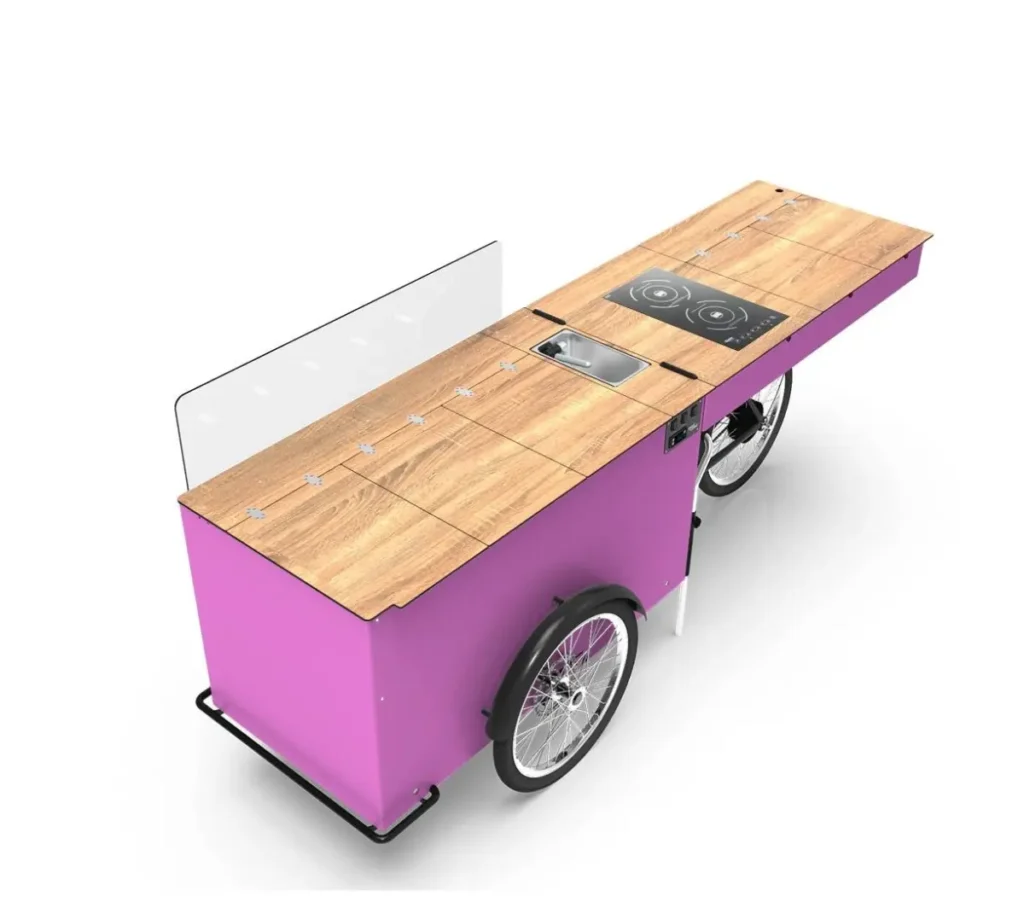
| Coffee, crepes, one-item menus | Single-stove cooking cart | $3,000–$4,500 |
| High-volume savory menus | Double-stove cooking cart | $4,000–$6,500 |
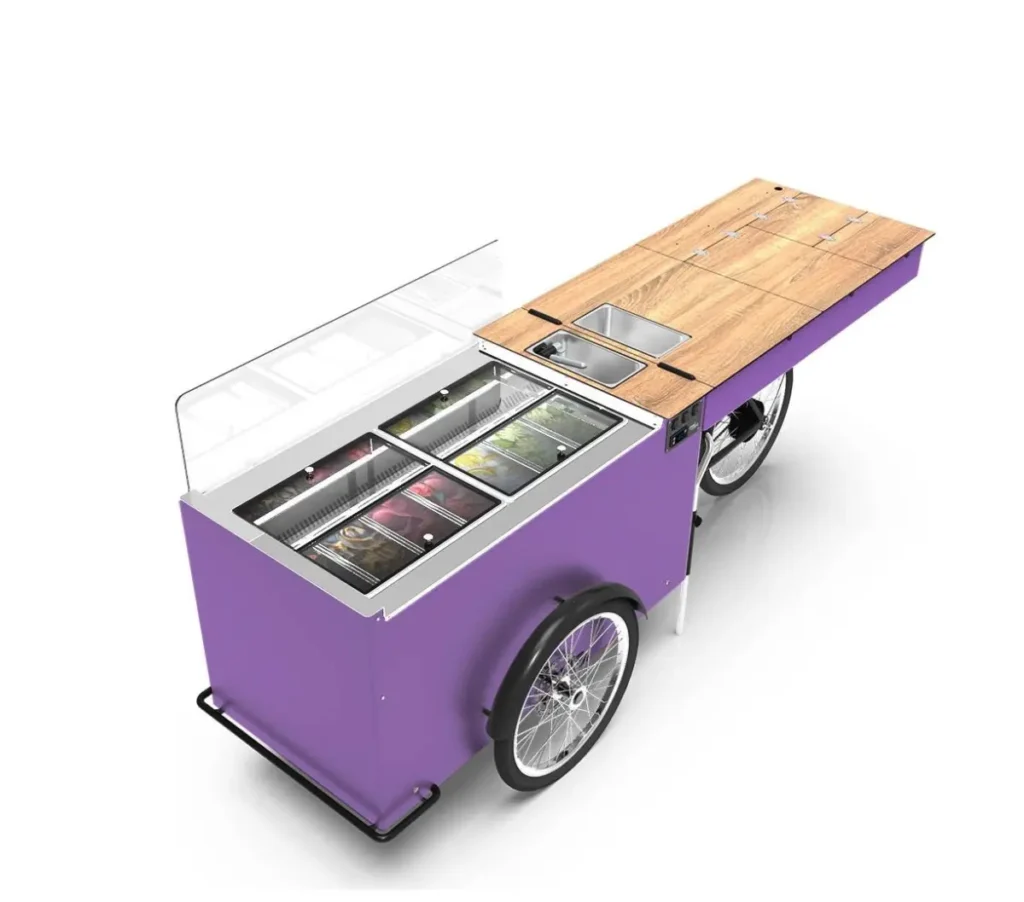
| Gelato / ice cream | Pozzetti ice cream cart | $4,500–$8,500 |
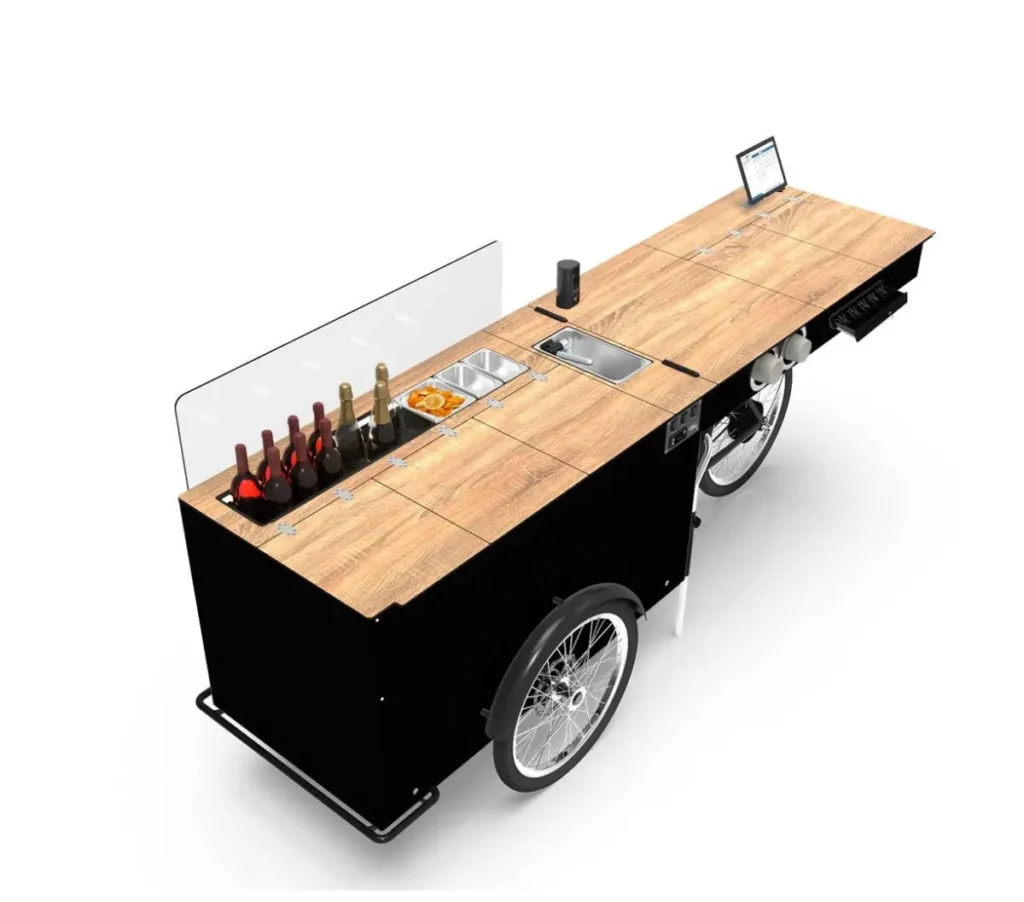
| Drinks, festivals, parks | Beverage & beer cart | $3,500–$6,000 |
| Already own equipment | Multi-purpose base cart | $1,800–$3,000 |
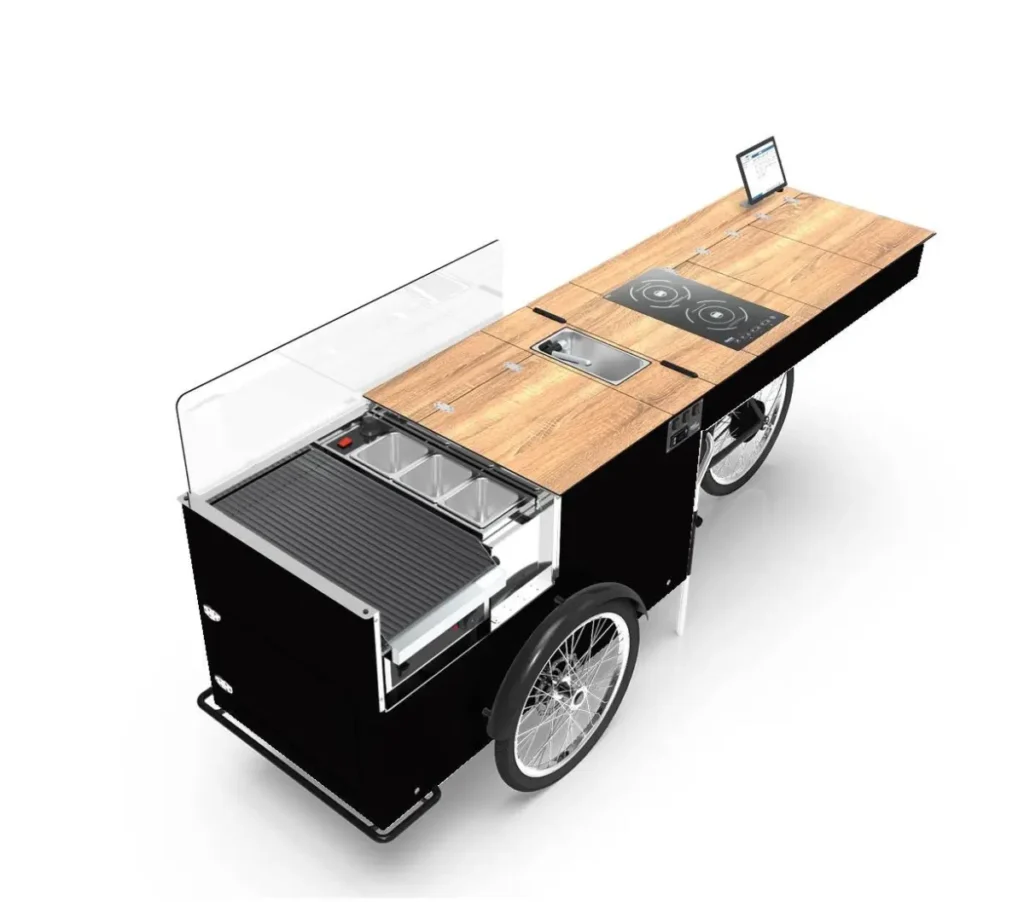
Browse all configurations in the product catalog or by family: cooking carts, ice cream carts, beverage carts, base carts.
Step 4: Order Factory-Direct (Week 2–3)
Send your menu + city requirements to a manufacturer and get an itemized quote. What to confirm before paying:
- Equipment spec matches your menu (stations, power draw, battery capacity)
- Electrical standards for your country — 110V/220V, plug type, CE/UL
- Branding — wrap, signage, colors done at the factory ($200–$800, far cheaper than retrofitting)
- Delivery terms — FOB or door-to-door, who handles customs
Standard configurations ship in 10–15 days, custom builds 25–40 days, plus 25–40 days ocean transit. Full cost breakdown in How Much Does a Food Cart Cost? Get a quote via our contact page or WhatsApp +86 137 5771 7214 — itemized quotes within 24 hours.
Step 5: Lock Your Location Strategy
Three proven models:
- Fixed daily spot — office blocks, hospitals, campuses. Predictable revenue, needs daily permit or private agreement.
- Event circuit — festivals, markets, sports events. Higher per-day revenue ($1,000–$4,000/day), book 2–3 months ahead. Carts outperform trucks here: silent battery power gets you into venues that ban generators.
- Rental arbitrage — rent your cart out on weekends or to caterers. Common in Europe; a $5,000 cart rents for $150–$300/day.
Step 6: Register the Business and Insurance
Budget $100–$1,500: LLC or sole-proprietor registration, food handler certificate, product liability insurance ($400–$1,500/year). Most cities require the food handler cert before the health permit issues — do it online while your cart ships.
Step 7: Soft Launch and Iterate (Week 6–8)
Run 2–3 soft-launch days: limited menu, friends-and-family pricing, and measure ticket time and sell-out rate. Two numbers decide everything:
- Sell-out rate over 80% → raise prices 10–15% or upgrade to a double-station cart
- Sell-out rate under 40% → change the menu, not the cart — cheaper and faster
Step 8: Scale to Cart #2 (Month 4–12)
Once location #1 is stable, a second cart costs less than half of your first (you know the permits, the supplier, and the menu). Two carts in two locations is the classic $8,000–$12,000 expansion that out-earns one food truck for a fraction of the capital — see cart vs truck economics. Fleet buyers order 4–8 carts per container; we handle the loading plans as part of our export service.
Startup Budget Summary (Year One)
| Item | Budget |
|---|---|
| Cart delivered (factory-direct + freight + import) | $3,600–$11,000 |
| Permits, licenses, food handler cert | $300–$3,500 |
| Insurance (year 1) | $400–$1,500 |
| Initial inventory & smallware | $500–$1,500 |
| Marketing & launch | $200–$1,000 |
| Total | $5,000–$18,500 |
Carts to Start With
Menu Ideas That Work on Food Carts (With the Equipment Each Needs)
The fastest way to choose a cart is to choose a menu first. These six concepts account for most of the carts we export, each matched to its factory-fitted equipment:
- Coffee & pastries — 2-group espresso machine, under-counter fridge, pastry display. Runs entirely on battery+shore power. Best carts: single-stove or base cart.
- Crepes & waffles — dual griddle plates, batter fridge, warming drawer. A dessert menu with 80%+ margins. Best cart: double-stove cooking cart.
- Gelato & ice cream — pozzetti pans or dipping cabinet, no cooking, silent service. Best cart: Pozzetti ice cream cart.
- Burgers & hot dogs — flat griddle plus fryer, extraction hood, dual sinks. Best cart: double-stove with fryer package.
- Bao, dumplings & steamed snacks — electric steamer stack, holding cabinet. Very low fuel cost, high perceived value.
- Drinks, lemonade & beer — taps, glycol cooling, glasswasher. The highest-margin category at festivals. Best cart: beverage & beer cart.
Notice the pattern: every menu above is 3–6 items, one cooking method, sub-4-minute tickets. That is not a coincidence — it is the design envelope of a cart. If your dream menu needs a six-burner range and a salamander, that is a truck or a restaurant, and the cart vs truck guide will save you from buying the wrong platform.
Seasonality: Making Money 12 Months a Year with One Cart
Single-location carts live or die on seasonality. The operators who thrive treat the year as three venues, not one:
- High season (summer) — parks, festivals, beaches, tourist streets. This is where a drinks or ice-cream cart can take $1,000–$4,000 per event day. Book the calendar 2–3 months ahead; the best events sell out vendor slots early.
- Shoulder season — move to weekday office and campus pitches: predictable volume, less weather risk, and morning coffee or lunch menus that do not depend on sunshine.
- Low season (winter) — three proven options: (1) relocate indoors — malls, markets and food halls actively recruit battery carts because they emit no fumes; (2) switch the menu — hot drinks and hot snacks replace ice cream; (3) rent the cart out to caterers and event companies at $150–$300/day.
Because a cart is a $3,000–$8,500 asset rather than a $100,000 vehicle, seasonal downtime costs almost nothing — there is no loan payment, no registration and no engine to rot in storage. That flexibility is itself a financial feature: see the year-one budget in our cost guide, then check the current catalog to spec your configuration.
Common First-Year Mistakes (and the Fix for Each)
We get calls from operators at every stage, and the same five first-year mistakes come up again and again. Learn them here for free:
- Over-buying equipment for an unvalidated menu. The fix: start with a single-station cart, prove the menu for 8–12 weeks, then upgrade or add a second cart.
- Choosing the location last. The fix: secure the pitch or event calendar BEFORE ordering the cart; the venue decides the equipment spec (power availability, health requirements, footfall profile).
- Menus with too many items. The fix: 3–6 items, one cooking method. Every extra item adds stock, waste and ticket time — and carts win by being fast.
- Ignoring the power budget. The fix: list every appliance’s wattage and duty cycle before ordering; the factory sizes batteries and breakers from that list. An undersized battery kills a service day.
- No branding at build time. The fix: send logo files with the order — factory-applied wraps and signage cost $200–$800 versus $800–$2,000 locally, and the cart arrives camera-ready for launch day social media.
None of these are fatal if caught early — and all of them are avoided by the sequence in this guide. When you are ready, send your menu and city and we will return an itemized quote with the power budget already calculated.
Building Your First-Week Launch Checklist
The difference between a smooth opening and a chaotic one is almost always the checklist. Seven days before launch: confirm the health inspection appointment, test every appliance on a full circuit load, run a complete dress rehearsal of your menu from prep to service, and print signage with prices and payment QR codes. Three days out: stock three days of inventory rather than one, map your parking spot and its foot-traffic peaks, and brief any staff on the setup and teardown sequence — target under 20 minutes each way. Launch day: arrive 90 minutes before service, photograph the finished setup for your social channels and insurance file, and log every transaction from hour one so your first week produces real sales data. Operators who follow this sequence typically hit break-even targets 30–40% faster than those who improvise. The full planning sequence lives in the sections above, and the equipment buyer’s guide helps you finalize the last hardware decisions before inspection day.
Frequently Asked Questions
How profitable is a food cart business?
A well-located cart typically nets $500–$2,500 per week with food costs at 28–35%. Because startup capital is under $15,000, break-even commonly arrives in 3–10 months.
Do I need a food safety certificate to run a food cart?
In most jurisdictions, at least one certified food handler must be on the cart. The online course costs $10–$100 and takes 2–8 hours — do it while your cart ships.
Can I start a food cart business with $5,000?
Yes, at the lean end: a base cart ($1,800 FOB) plus used equipment, modest freight, and minimal permits. Most operators are more comfortable at $8,000–$12,000 all-in.
How long does it take to start?
Permit research 1–2 weeks, cart production 10–15 days (standard) or 25–40 days (custom), ocean transit 25–40 days, then soft launch. Realistic total: 60–90 days door-to-door.
Is a food cart a good first food business?
It is the lowest-capital, lowest-risk entry into food service: no lease, no build-out, no vehicle registration, and you can relocate a failing location in one afternoon.
Written by Mike, export sales lead at MAG-STAR CHEF. Ready to spec your first cart? Send your menu and city for an itemized quote within 24 hours (WhatsApp +86 137 5771 7214).