Quick answer: A food cart costs between $1,800 and $8,500 from a factory-direct manufacturer, depending on type and equipment. Base multi-purpose carts start around $1,800–$3,000, cooking carts run $3,000–$6,500, and refrigerated carts (ice cream, beverage) reach $4,500–$8,500 because of batteries and cooling systems. Add $1,200–$2,500 for sea freight and import costs, and $0–$1,500 for equipment and branding.
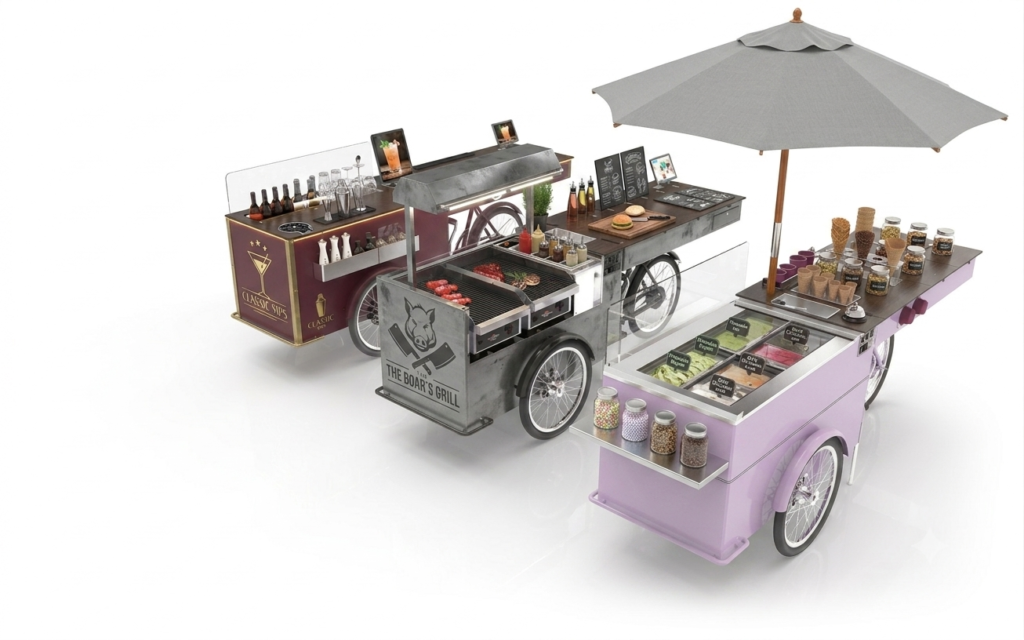
If you are budgeting a street-food venture, a festival business, or a rental fleet, the cart itself is only one line item. This guide breaks down every cost component — cart body, equipment, power systems, shipping, customs, and operating costs — using real factory-direct pricing from MAG-STAR CHEF, a food cart manufacturer in Wenzhou, China. Not sure what a food bike is yet? Start with What Is a Food Bike? Complete Guide.
Food Cart Price Ranges at a Glance
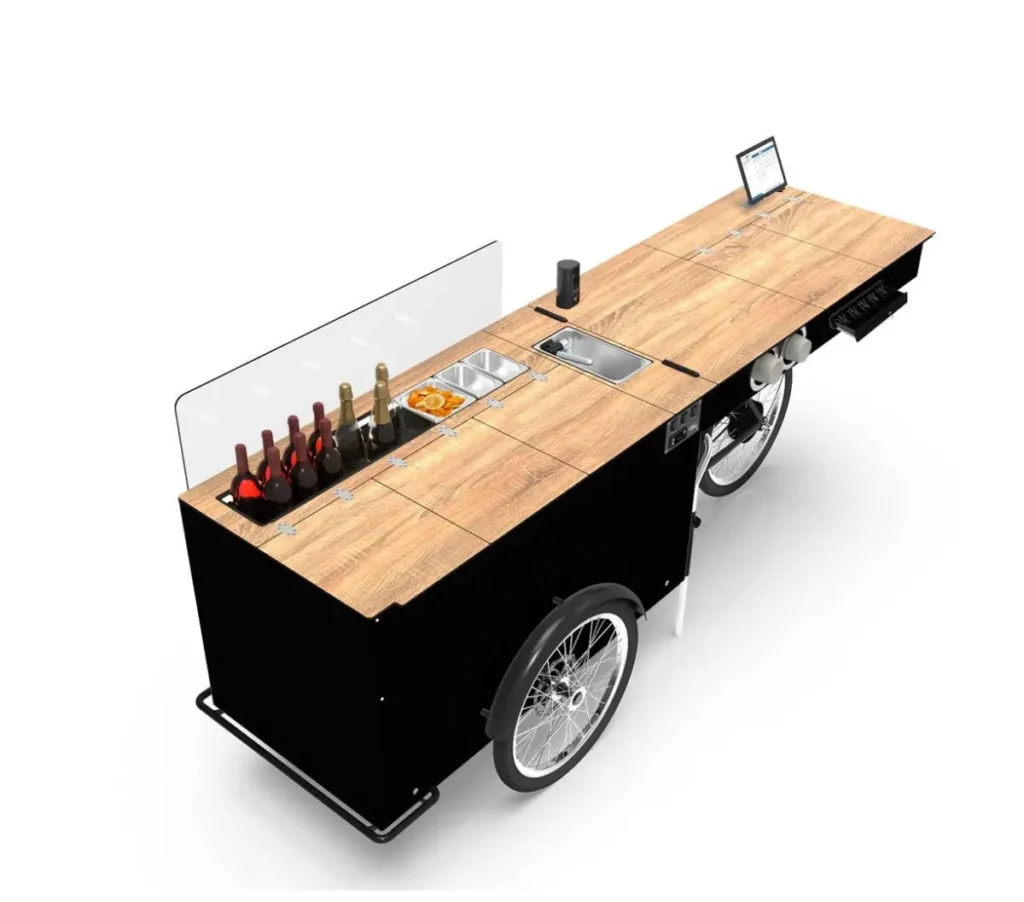
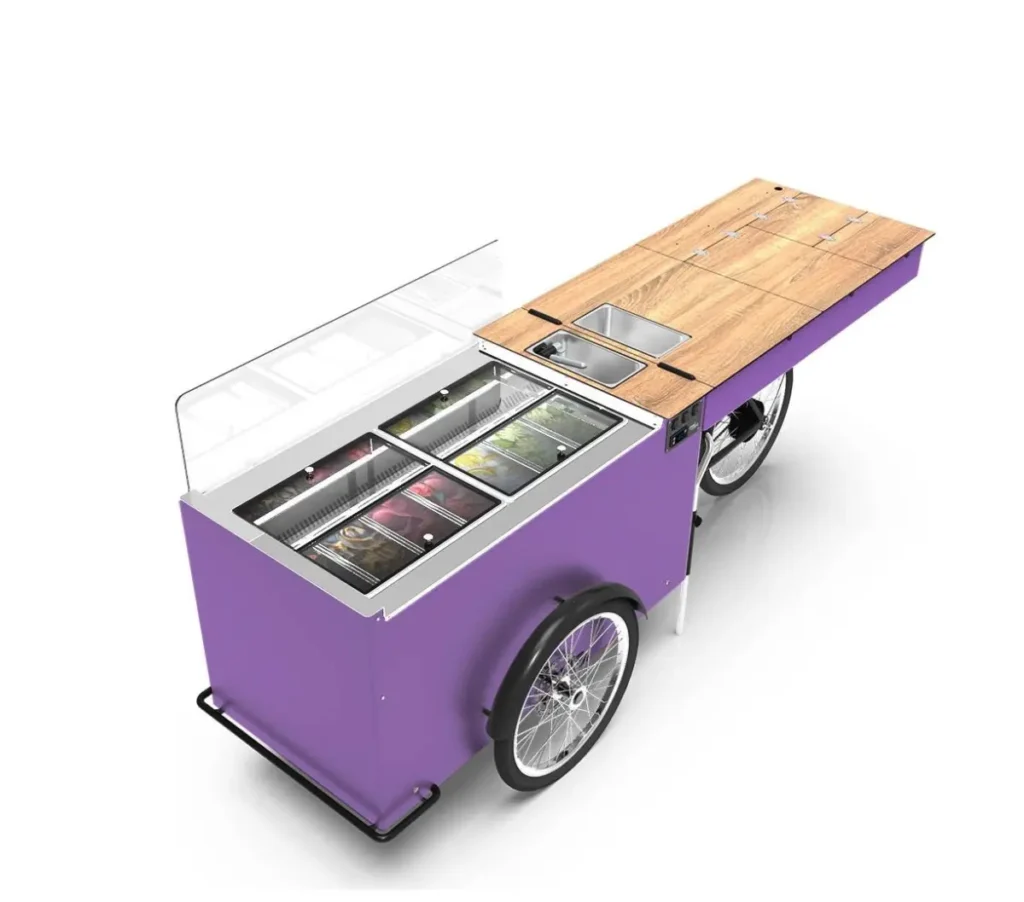
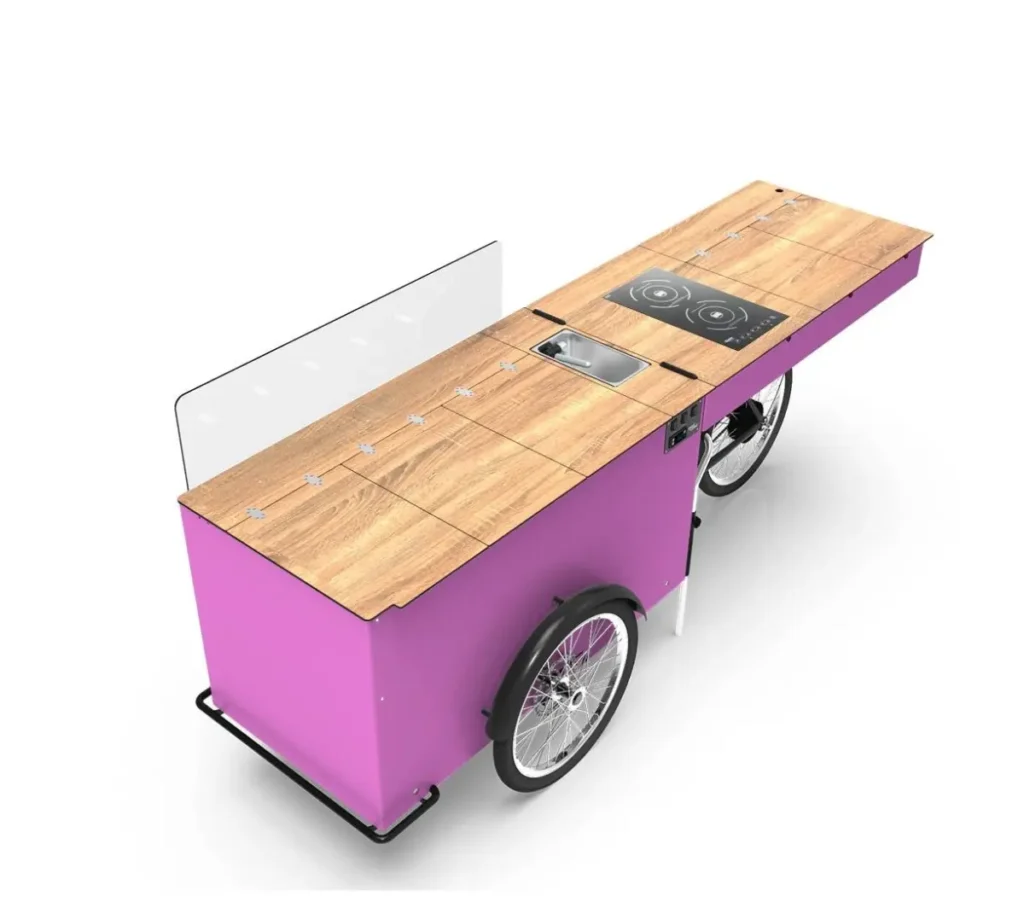
Here is the pricing we quote for our four cart families, factory-direct (FOB China). Your final number depends on equipment selection and branding:
| Cart Type | Typical Factory Price | Best For |
|---|---|---|
| Multi-purpose base cart | $1,800 – $3,000 | DIY operators adding their own equipment |
| Single-stove cooking cart | $3,000 – $4,500 | Coffee, crepes, single-menu street food |
| Double-stove cooking cart | $4,000 – $6,500 | High-volume savory menus |
| Beverage & beer cart | $3,500 – $6,000 | Events, parks, festivals with tap system |
| Pozzetti ice cream cart | $4,500 – $8,500 | Gelato with battery refrigeration |
Browse all configurations in our product catalog or by family: cooking carts, ice cream carts, beverage carts, and base carts.
What You Pay For: Cost Components Explained
1. Cart body and structure
The frame, stainless steel worktops, food-grade panels, wheels, and canopy account for the base cost. This is where factory-direct sourcing saves the most: the same cart sold by a local dealer often carries a 40–100% markup over FOB pricing.
2. Equipment installed at the factory
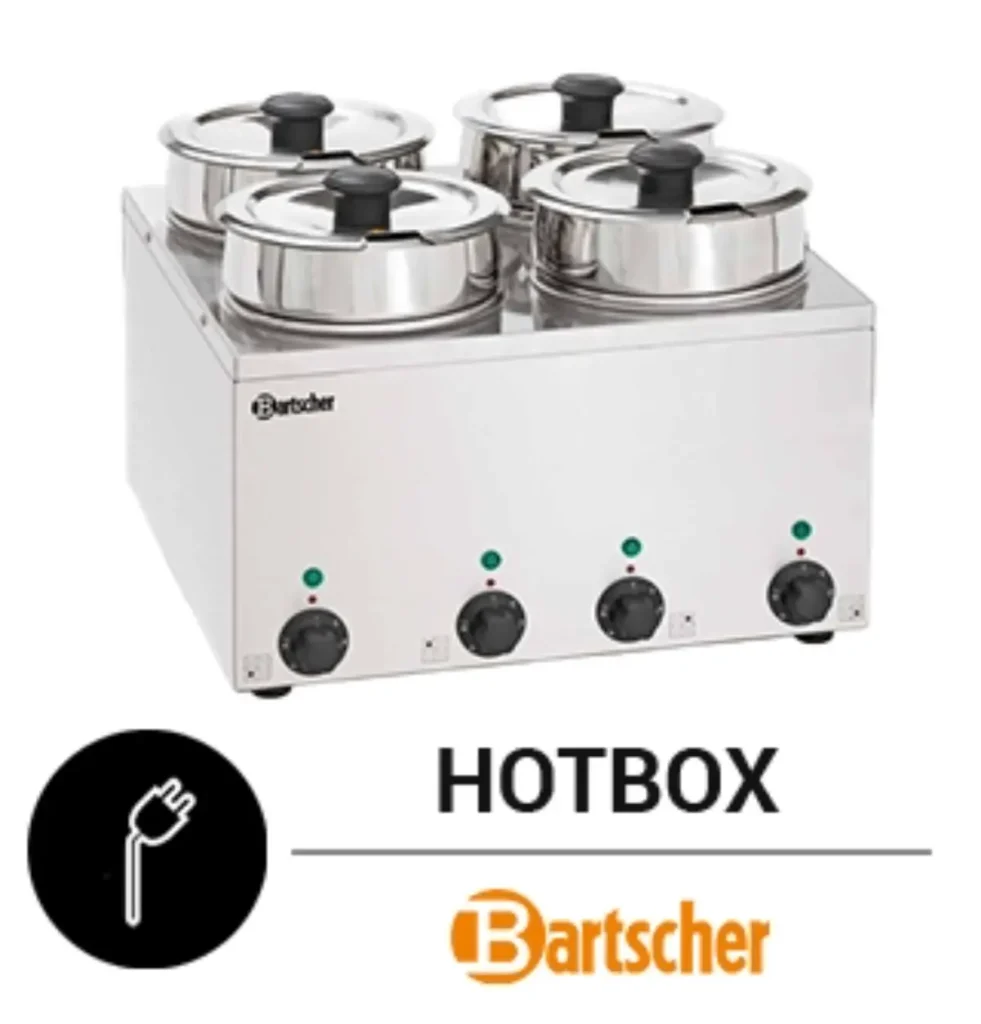
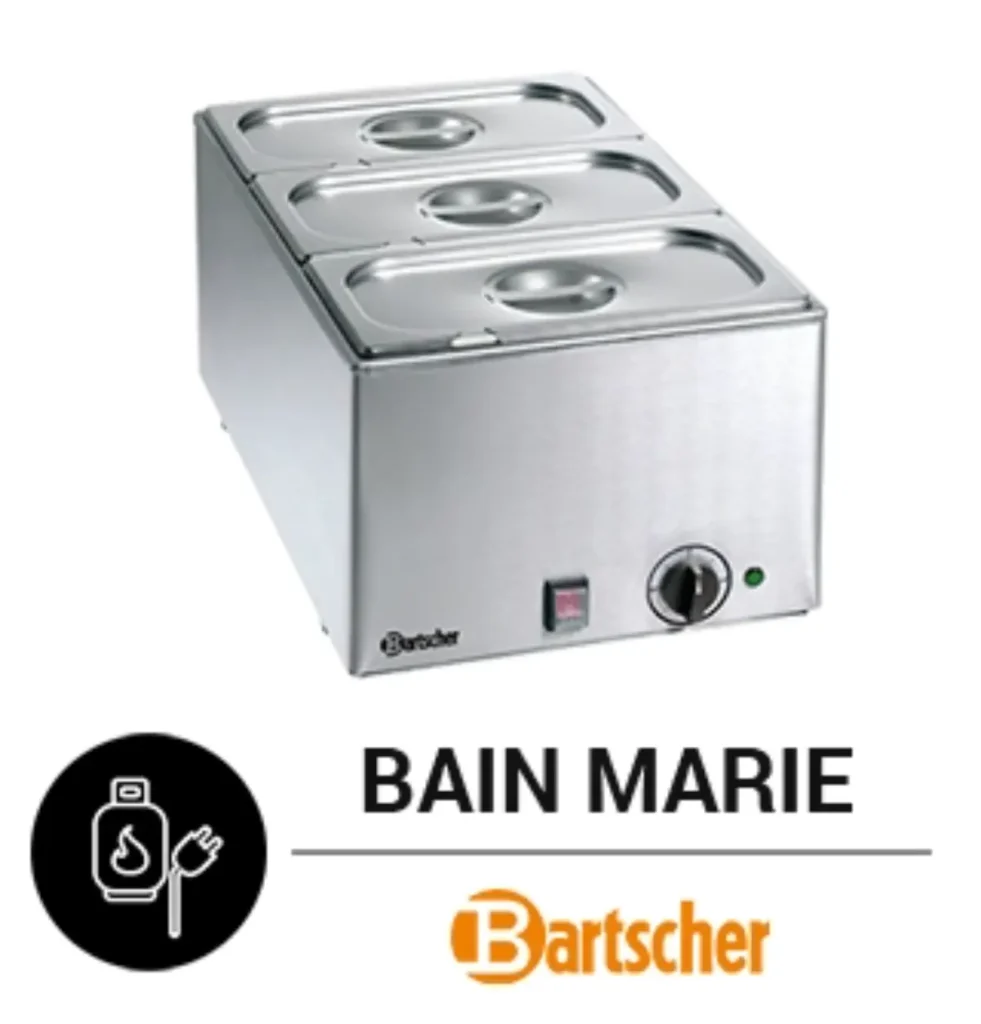
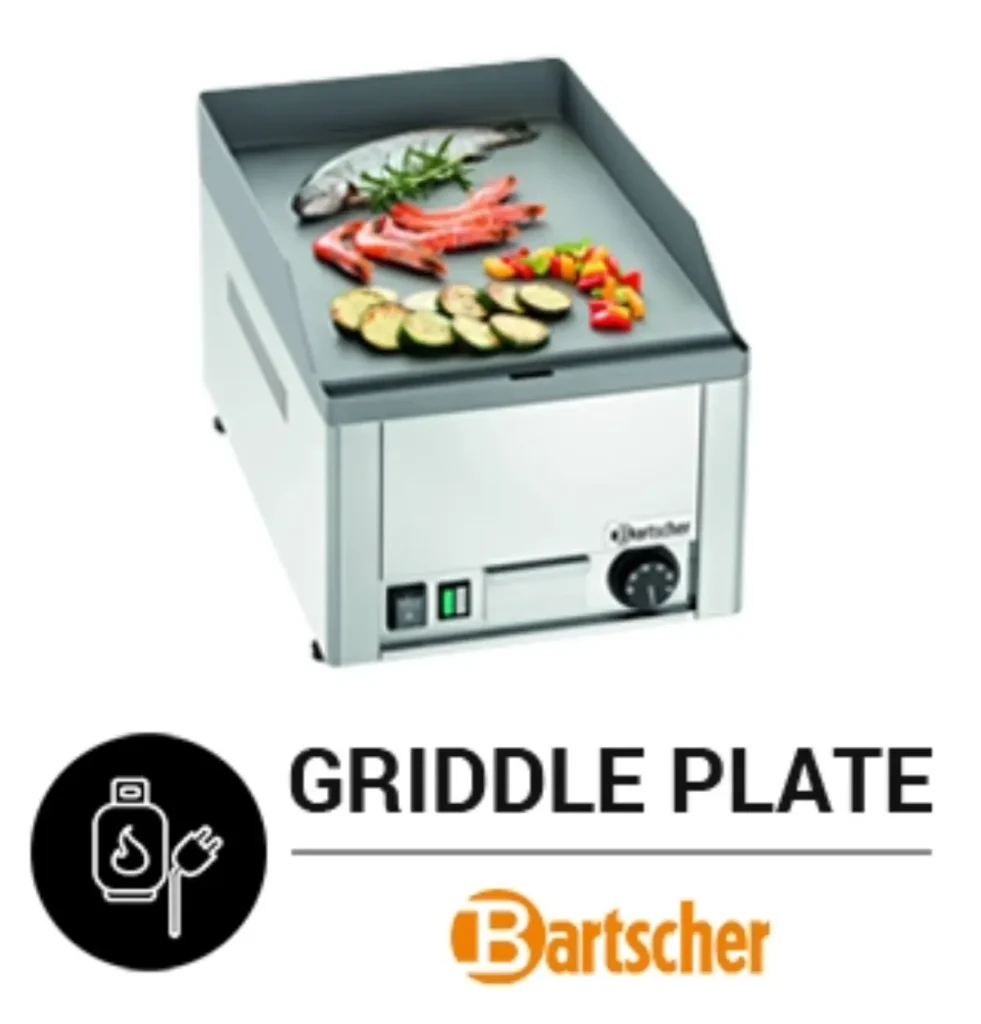
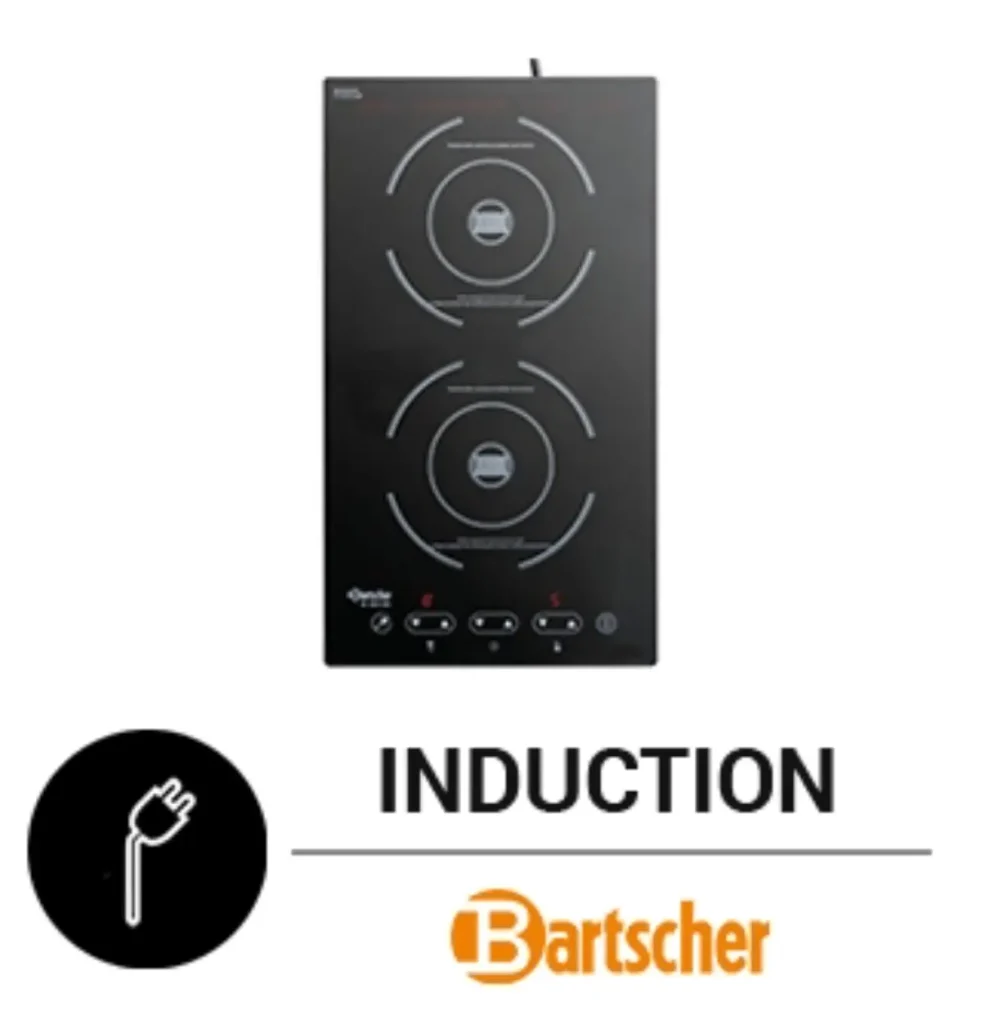
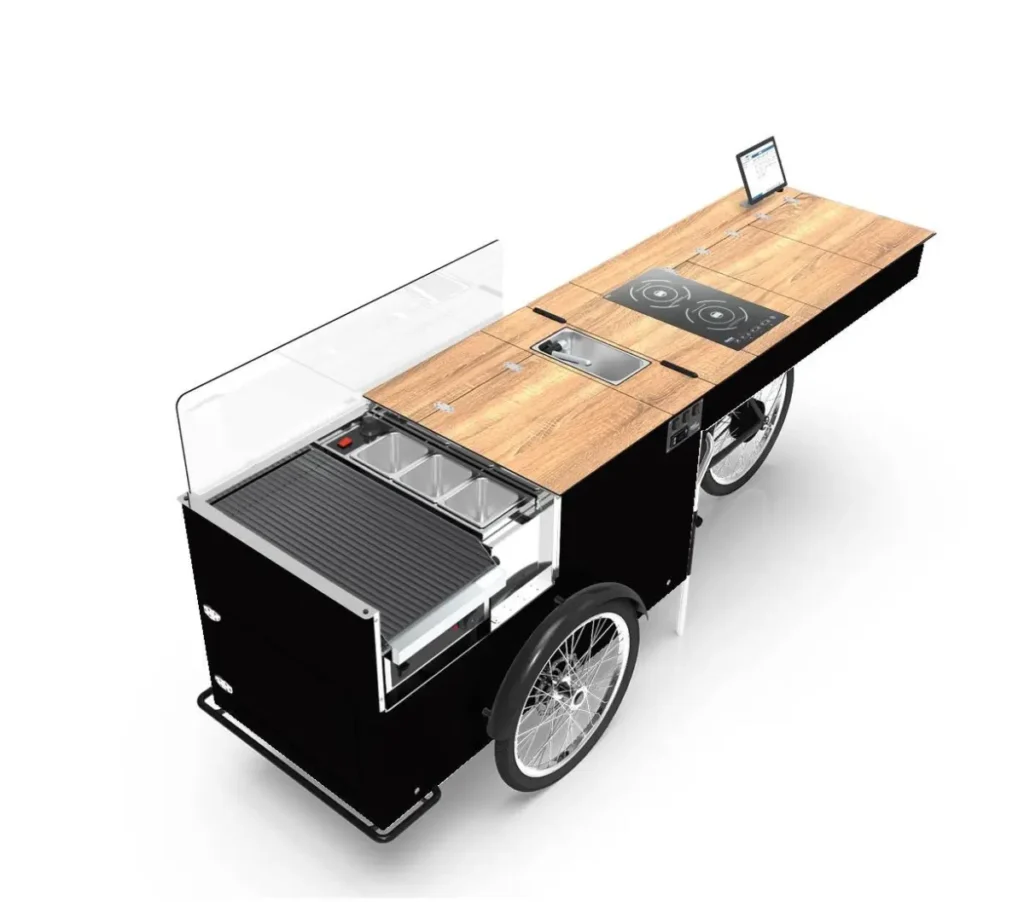
Cooking equipment is usually the biggest variable. A bare cart plus a commercial electric heating pot and a steamer can cost less than one cart fitted with dual induction wok burners. Full equipment options live in our cooking equipment catalog.
3. Power system: battery vs. shore power
Electric carts need lithium batteries, which are priced by capacity (Ah). A cart running only small heating items may carry a modest battery; a Pozzetti ice cream cart with compressor refrigeration needs a larger battery bank — that is why refrigerated carts sit at the top of the price range.
4. Branding and customization
Vinyl wraps, LED signage, custom colors, and logo panels typically add $200–$800 when done at the factory — far cheaper than retrofitting locally.
Shipping and Import Costs: The Hidden 30%
Factory price is not your landed cost. Budget these items:
- Sea freight: $1,200–$2,500 per cart to US/EU ports (LCL), less for container orders of 4–8 carts
- Import duty: varies by country; food carts often classify under mobile food-preparation equipment — check your HS code (typically 8438 or 8716 family) with your customs broker
- VAT/GST: payable at import in the EU, UK, and Australia
- Local delivery & port fees: $300–$600 typical
Door-to-door, expect shipping and import costs of roughly $1,800–$3,000 for a single cart, falling per-unit when you order multiple carts in one container. We handle container loading plans in-house — that is part of our manufacturing and export service.
New vs. Used vs. Custom Food Carts
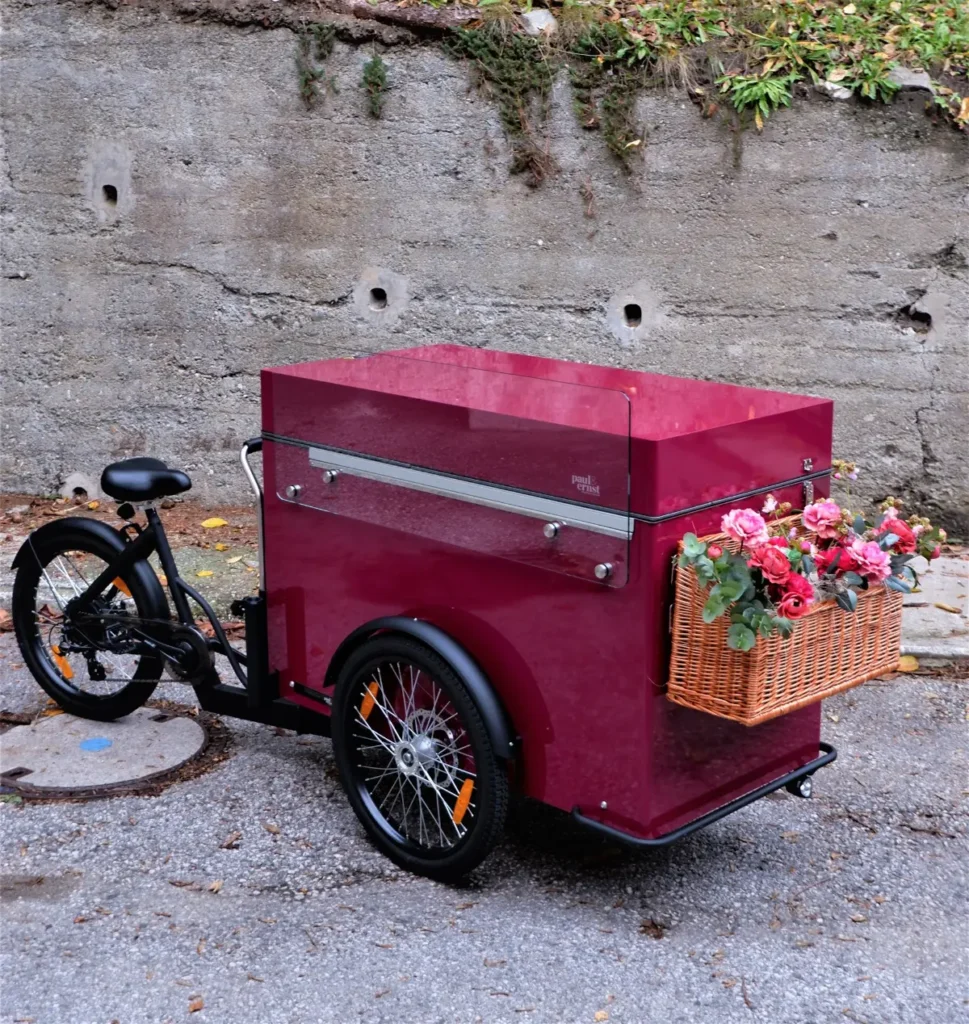
Used carts ($800–$3,000) look cheap but carry risk: worn batteries, replaced refrigeration compressors, and no warranty. Battery replacement alone can erase the savings.
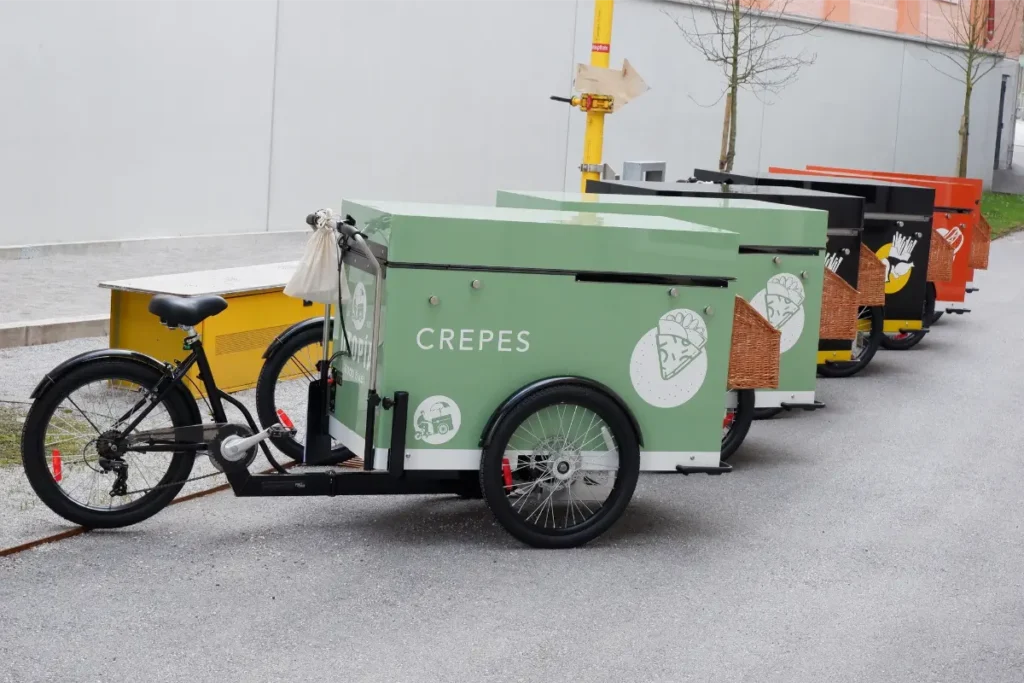
New factory-direct carts ($1,800–$8,500 FOB) come with CE-compliant wiring, new batteries, and a warranty from the manufacturer.
Custom builds ($5,000–$12,000+) make sense for brands that need a specific footprint, unusual equipment layout, or full wrap branding from day one. Custom carts take 25–40 days to build.
For most first-time buyers, a new single-station cart or a base cart is the smartest entry point: lowest capital at risk, fastest delivery, and easy resale if the location underperforms.
Total Cost of Ownership: Year One
| Item | Typical Range |
|---|---|
| Cart (factory-direct, delivered) | $3,600 – $11,000 |
| Permits & licenses | $100 – $2,000 (varies by city) |
| Insurance (annual) | $400 – $1,500 |
| Battery replacement reserve | $300 – $900 (year 3+) |
| Maintenance & consumables | $300 – $800 / year |
Compared with a food truck ($50,000–$175,000 per the industry overview), a food cart reaches break-even far faster. Permit requirements differ widely — check local health-code rules before ordering; the FDA Food Code is the baseline for US jurisdictions, and the US Small Business Administration publishes food-business licensing guides.
How to Get an Accurate Quote in 24 Hours
- Decide your menu — equipment follows the menu, not the other way round
- Measure your site: length limit, power availability, storage space
- Send us your requirements — we reply with a configuration sheet, itemized pricing, and delivery terms
- Confirm electrical standards for your country (110V/220V, plug type, CE/UL requirements)
Request a quote via our contact page or WhatsApp +86 137 5771 7214. We quote factory-direct prices with no middleman markup — see how we work in About MAG-STAR CHEF.
Recommended Carts by Budget
Hidden Costs Buyers Miss (and How to Avoid Them)
The purchase price is only the beginning. Across hundreds of export orders, these are the five hidden costs that surprise first-time buyers — each one avoidable with the right spec:
- Destination charges and customs. Port handling, customs clearance and import duty typically add 15–30% to the FOB price. Confirm your HS code (food carts usually clear under 8701 or 9506 depending on configuration) and your country’s duty rate before you order.
- Retrofitting equipment bought separately. Buyers who purchase a bare cart and add fryers locally pay 30–60% more than factory-fitted equivalents, plus electrician labor. Factory-fitting also keeps wiring under warranty.
- Branding after delivery. Local vehicle wraps cost $800–$2,000. Factory wraps on a bare metal cart run $200–$800 because the artwork goes on before glazing and hardware are installed.
- Wrong electrical standard. A 220V cart delivered to a 110V country means new power components. Confirm voltage, plug type and certification (CE/UL) in writing at the quotation stage.
- Accessories ordered twice. Sinks, awnings, spare-wheel mounts and shelving are options — list them once, at the quote stage, and the factory prices the package as one unit.
An itemized quote solves all five. Send your menu and city requirements to our sales team and you will receive a line-by-line quote including freight and estimated duty within 24 hours.
Financing a Factory-Direct Cart
Because the total outlay is small compared with a truck ($60,000+) or a restaurant lease, food carts are one of the few food businesses that can often be funded without a bank:
- 50/50 payment terms — standard at most Chinese factories: 50% deposit to start production, 50% balance before shipping. On a $4,500 cart that means only $2,250 ties up during the 3–5 week build.
- Equipment financing — US and EU lenders treat carts as equipment loans at 8–15% APR over 24–60 months; $10,000 of equipment costs roughly $200–$380/month.
- Revenue-sharing rental — some event organizers and malls provide pitches in exchange for a percentage of sales, cutting your fixed costs to near zero while you validate the menu.
- Container-share buying — fleet buyers and resellers can split a 40ft container (8–12 carts) with other operators, cutting per-unit freight by 30–40%. Ask us about current container groups.
Whichever route you choose, remember the cash-flow math from the cart vs truck analysis: a cart that nets $1,500/week repays its own purchase price in about one month of trading. Few pieces of business equipment pay back that fast.
Real Quotes: What Operators Actually Paid in 2026
List prices help, but real orders with freight tell the full story. Three recent examples from our order book (anonymized, prices rounded):
- Single-stove cart to Spain — $3,600 cart + $1,300 sea freight (container share) + $620 customs and VAT handling = $5,520 delivered. Operator runs coffee and churros in Valencia; payback in under 4 months.
- Double-stove cart with fryer package to the USA — $5,400 cart + $1,900 freight + $1,100 duty and clearance = $8,400 delivered. Burger menu at weekend markets in Texas.
- Pozzetti ice cream cart to the UAE — $6,800 cart + $1,600 freight + $900 clearance = $9,300 delivered. Placed on a hotel promenade; the hotel took a revenue share instead of rent.
Two lessons repeat in every order: (1) freight scales with volume, not price — a container-shared load cuts per-cart shipping dramatically, and (2) factory-fitted equipment and branding done at build time cost a fraction of local retrofits. Full price tables are in the section above, and a live itemized quote takes 24 hours via our contact page (WhatsApp +86 137 5771 7214).
Price Benchmarks by Business Model
The right budget depends less on the cart itself and more on the revenue model you attach to it. A coffee and beverage operator typically spends $3,500–$7,000 on a fitted cart and recovers it in 4–6 months at 40–60 cups a day. Ice cream and gelato vendors run $4,000–$9,000 with refrigeration, and season length decides payback: 6-month seasons recover in one year, 9-month climates in a single season. Street-food operators with griddles or fryers invest $6,000–$12,000 because ventilation and fire safety add real hardware, but ticket averages of $10–$15 shorten payback dramatically. Event and wedding caterers sit at the premium end ($8,000–$15,000) because presentation and custom branding command corporate rates of $1,500–$3,000 per event. Match the budget table in this guide to your model before requesting a quote, and use the launch guide to sequence the spending.
Frequently Asked Questions
How much does a food cart cost to import from China?
Factory price ($1,800–$8,500) plus sea freight and import charges ($1,800–$3,000 for a single cart, less per cart in bulk). Your landed cost is typically factory price plus 30–40%.
Is it cheaper to buy a food cart or build one?
Buying factory-direct is almost always cheaper. Self-builds save less than expected once you price stainless steel fabrication, food-safe surfaces, CE-compliant wiring, and batteries at retail — and they void most permit fast-tracks that pre-certified carts enjoy.
What is the cheapest food cart that still passes health inspections?
A base multi-purpose cart fitted with a single cooking station — roughly $3,000 FOB. It includes stainless worktops and a handwash-ready layout; you add local-compliance details (handwash tank, covers) per your jurisdiction.
Do food carts hold their value?
Well-maintained carts resell at 50–60% after two seasons. Battery condition drives most of the depreciation — order one spare battery strategy and keep charge records.
How long does a food cart order take?
Standard configurations ship in 10–15 days; custom builds take 25–40 days; ocean transit adds 25–40 days to US/EU ports. Ask about stock configurations for faster delivery.
Written by Mike, export sales lead at MAG-STAR CHEF. Questions about a specific configuration? Get an itemized quote.